

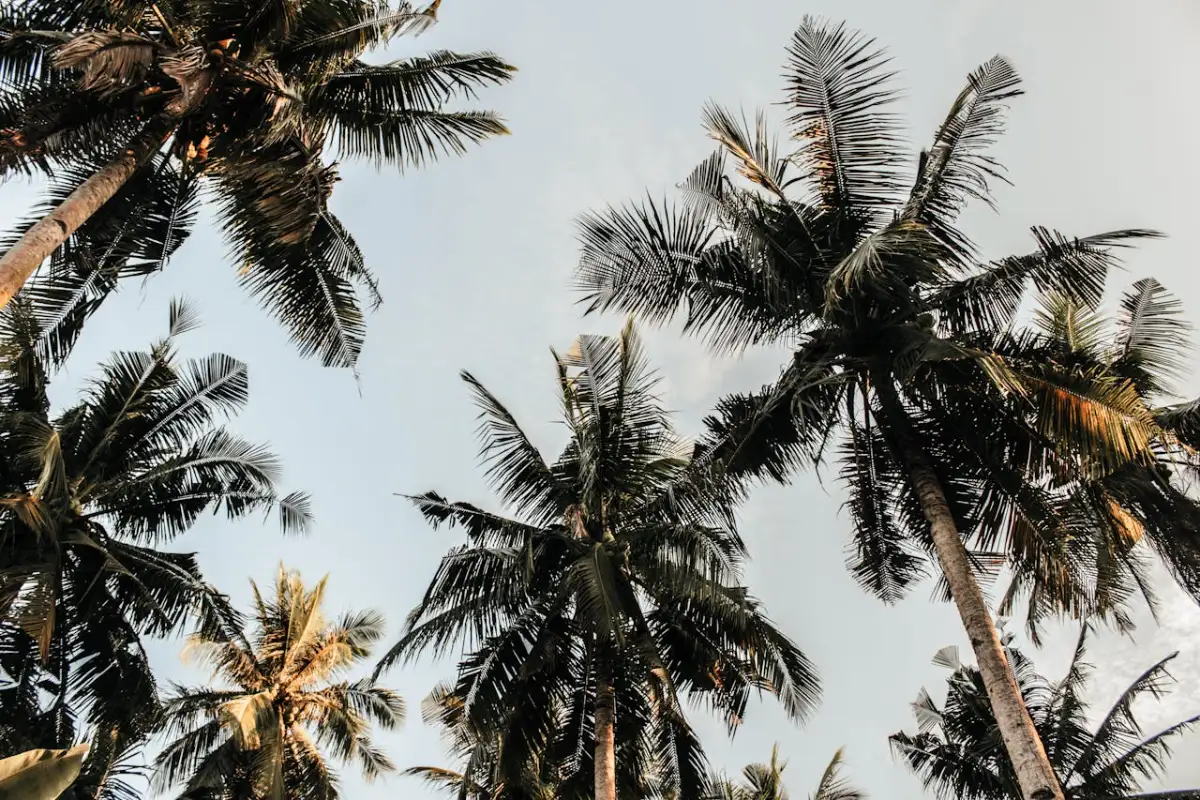
Palm trees are iconic to Florida, with the Sabal Palm (Cabbage Palm) officially designated as the state tree. There are many types of palm trees in Florida flourishing across diverse environments, from inland forests to sandy coasts, from the Panhandle to the Keys.
- Why Palm Trees Grow So Well in Florida
- Native Palm Trees in Florida
- Popular Non-Native Palm Trees in Florida
- Tall Palm Trees in Florida
- Small and Dwarf Palm Trees in Florida
- Cold-Hardy Palm Trees for North Florida
- How to Identify Florida Palm Tree Species
- Choosing the Right Palm Tree for Your Landscape
- Common Problems with Palm Trees in Florida
- Final Thoughts — Picking the Best Palm Tree for Your Florida Yard
- Frequently Asked Questions (FAQs)
Thanks to Florida’s sandy, well-draining soils, consistent rainfall, and subtropical climate, which create an ideal foundation for palm trees.
The state boasts a handful of native palms, such as the Saw Palmetto and Cabbage Palm, that have adapted to local pests and weather swings, making them incredibly low-maintenance and vital to the local ecosystem
Florida is also home to many non-native species, such as Royal Palms and Foxtails. These stunning and exotic species can thrive in the local environment, but sometimes require more specialized care.
In this guide, we will explore the most popular types of palm trees in Florida, breaking down how to identify them, their mature sizes, and how to use them in your home landscape.
Why Palm Trees Grow So Well in Florida
Florida is practically synonymous with the silhouette of a palm tree against a sunset, and that’s for a reason. Florida offers a unique environment where palms don’t just grow, they thrive – from the true tropical heat of the Keys to the humid subtropical climate of the Panhandle.
Aside from Florida’s subtropical conditions, characterized by mild winters, high humidity, and ample sunshine, the state also has sandy, well-draining soils and consistent rainfall patterns. All of these create a perfect natural habitat for palm trees.
The palm trees, on the other hand, thrive in Florida’s humid subtropical and tropical climates because they are ‘monocots.’ That means they grow more like giant grasses than traditional hardwood trees.
The palms have evolved to withstand Florida’s low-nutrient, sandy soil by developing a dense, fibrous root system that spreads out horizontally to efficiently take up minerals and water.
Their strong root system also provides incredible stability in shifting sands against the powerful winds of hurricane season. Also, the trunks are made of flexible vascular bundles for hurricane tolerance, enabling them to bend up to 40° or 50° without breaking.
Moreover, these palms possess thick, waxy coatings on their fronds that make them salt-tolerant, helping prevent dehydration from the salt spray common in coastal areas.
Nevertheless, to ensure success, gardeners need to understand Florida’s USDA Hardiness Zones and choose palm trees that are suited to them.
Cold-hardy palm tree species like the Sabal (Cabbage) Palm and Needle Palm are best for Zones 8–9 (North Florida). Mediterranean and Caribbean varieties, such as the Bismarck or Royal Palm, are ideal for Zone 10 (Central/South Florida).
More sensitive species, such as the Coconut Palm, should be grown in Zone 11 (The Keys).
Native Palm Trees in Florida
Native Florida palm trees are naturally resistant to local pests, weather swings, and are more cold-tolerant.
They require significantly less water and fertilizer than exotic imports, and they can grow throughout most of Florida. Native palm trees offer the most sustainable way to landscape.
Sabal Palm (Cabbage Palm)
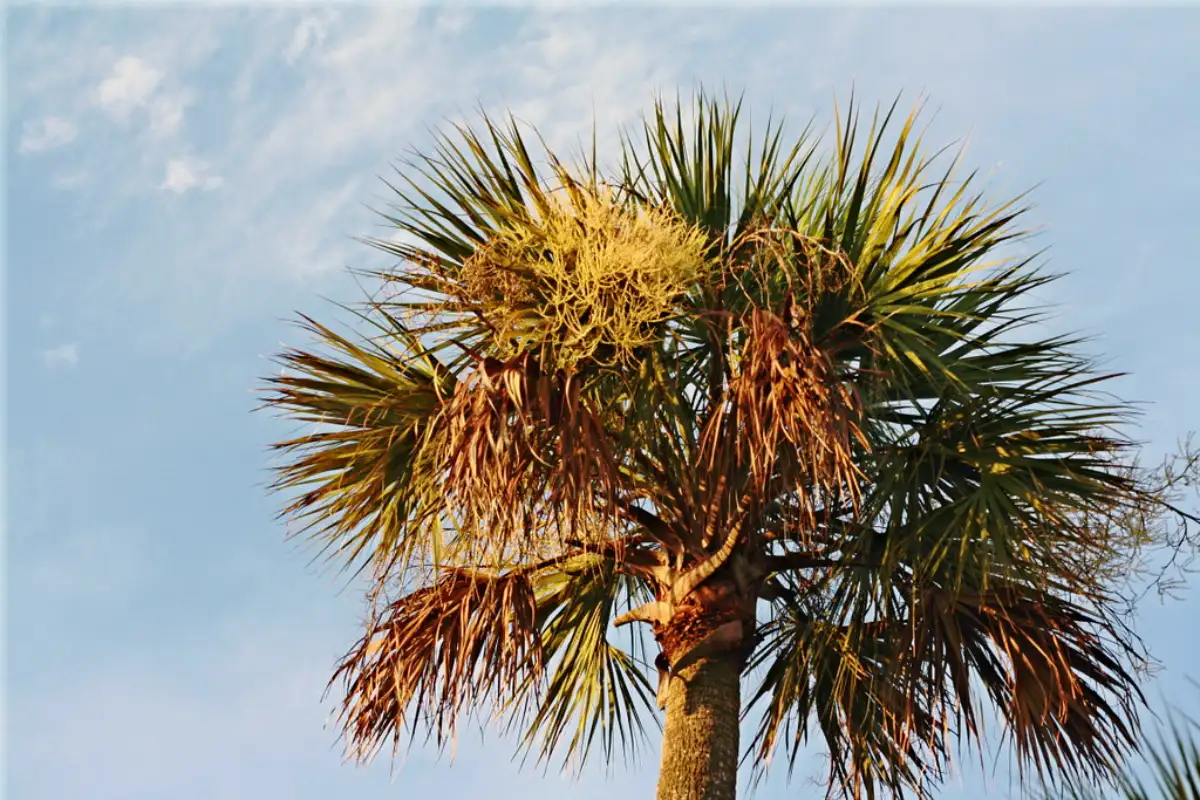
Sabal Palm (Sabal palmetto) comes first on our list of native Florida palm trees. This species is the official palm tree of Florida. It is a tall, low-maintenance, solitary palm that can reach heights of about 40ft. To 50 ft. This giant palm is resistant to salt spray, drought, and even hurricane-force winds.
Sabal Palm is famously cold-hardy, tolerating temperatures as low as 15°F. This is the reason why this species can thrive from the Panhandle down to the Keys.
Sabal Palm’s most distinctive identification feature is the cross-hatch pattern on the trunk, called ‘boots.’ These boots are actually created from old leaf bases.
While some gardeners prefer to remove the boots to get a clear trunk, some leave them to provide a habitat for various Florida wildlife and ferns.
Saw Palmetto
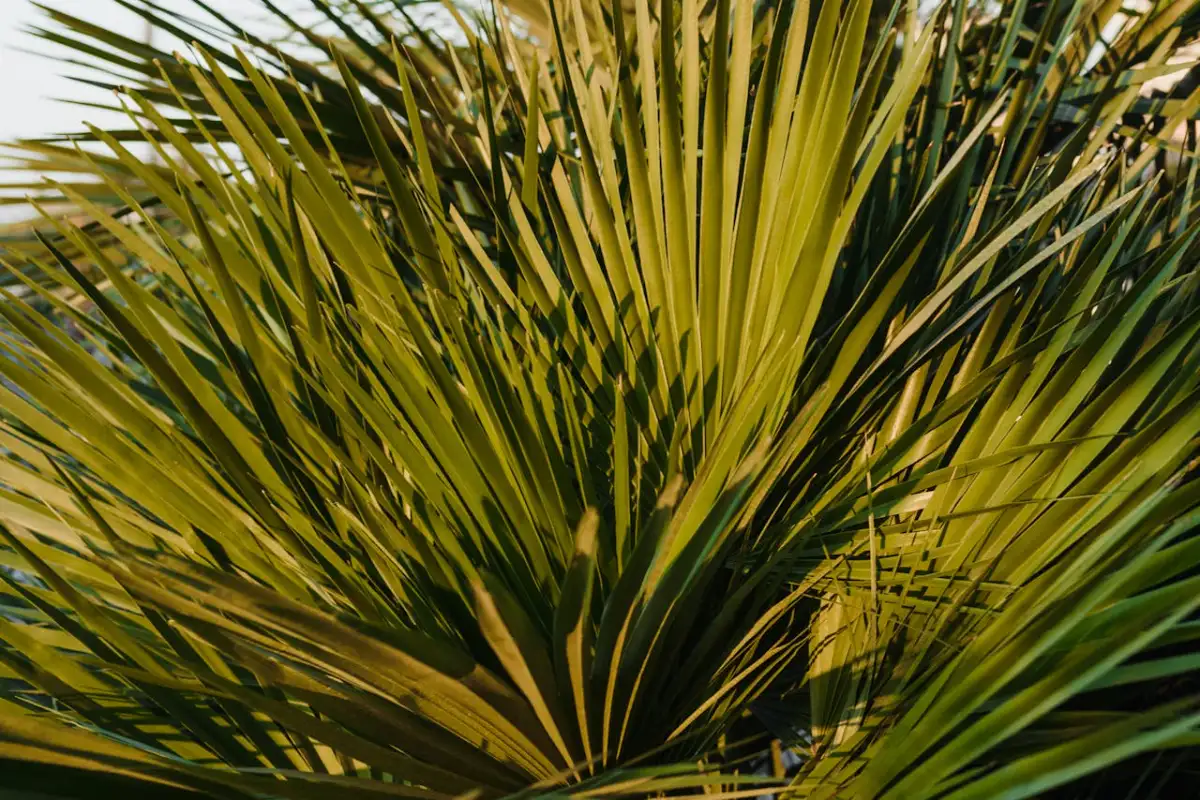
The next on the list is Saw Palmetto (Serenoa repens), well-known for its very short and bushy growth.
This small palm is a slow-growing, clumping species that usually stays between 5ft. and 10ft. tall. You can easily identify Saw Palmetto by its saw-toothed stems (petioles), which can be quite sharp. The thorn-shaped leaves are arranged in a fan shape.
This palm comes in two color morphs – a classic forest green and a striking silver variety common along the Atlantic coast.
Saw Palmettos are common in natural landscapes, providing essential nesting cover for over 200 species of wildlife. They are also often used for privacy screening or as a rugged, salt-tolerant border in home landscapes.
Saw Palmettos are notable for their berries, which contain beneficial fatty acids available as oils, teas, or capsules. Report has it that the berries are used in dietary supplements to potentially help with urinary issues from an enlarged prostate (BPH).
Dwarf Palmetto
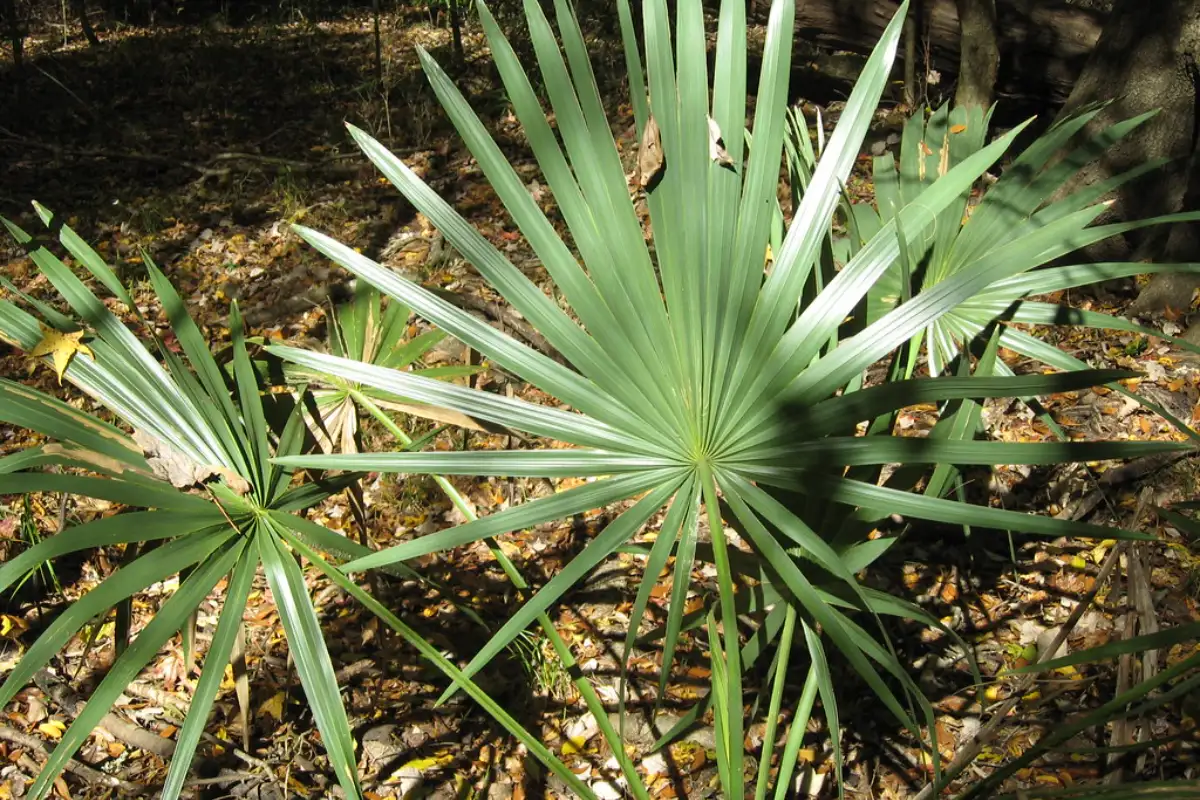
Many people often confuse Dwarf Palmetto (Sabal minor) with the Saw Palmetto. While both are small, clumping palms with fan-shaped leaves that look alike from casual examination, they are distinct species.
Saw Palmetto has sharp, saw-like teeth on its leaf stems (petiole) and prefers drier soils. Dwarf Palmetto’s leaf stems lack teeth, and it thrives in moist, swampy areas.
This palm is a small shrub, reaching only 4ft. to 6ft. in height. They are shade-tolerant and thrive in damp, swampy, poorly drained areas, where other palm trees might suffer from root rot.
Dwarf Palmetto has a subterranean trunk and often looks like a collection of large, blue-green fans emerging directly from the soil. This palm is an excellent choice for foundation plantings, small yards, or narrow garden beds.
Florida Thatch Palm
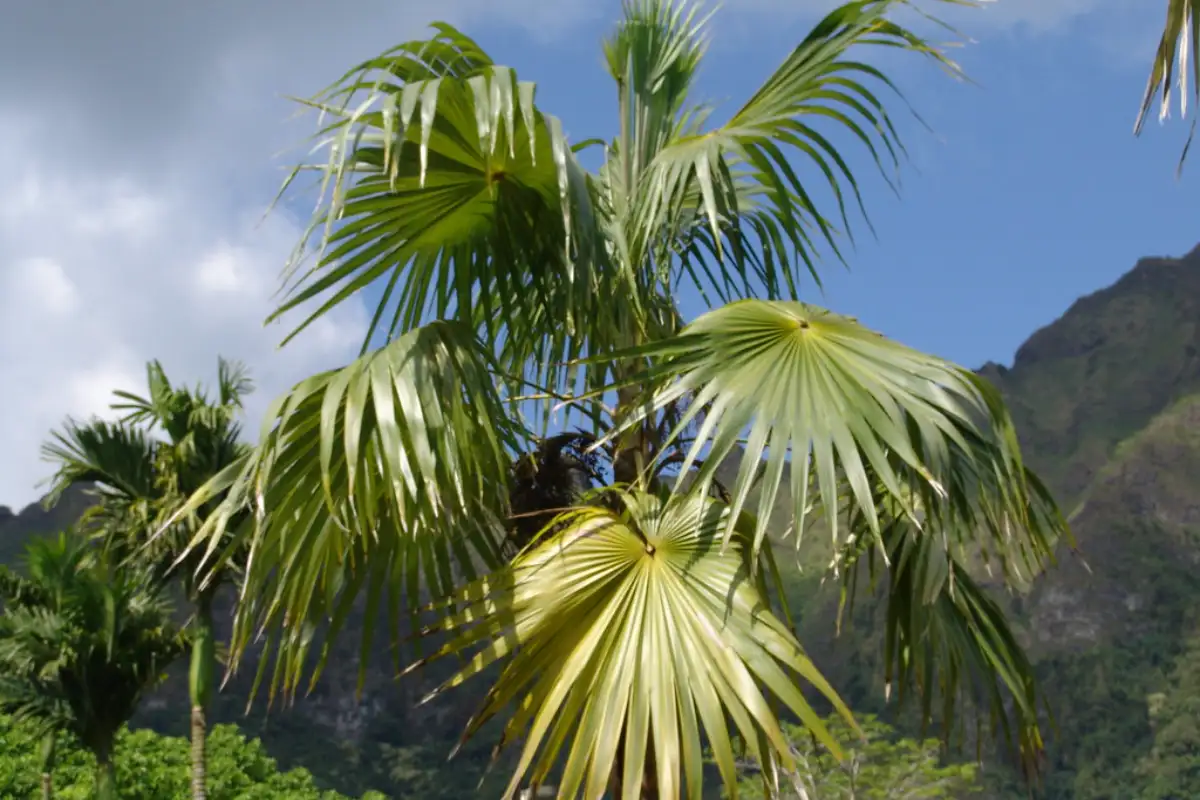
The last native Florida palm tree on our list is the Florida Thatch Palm (Thrinax radiata), a true tropical native to South Florida and the Keys.
This species is found naturally in the Florida Keys and the southern tip of the peninsula. Florida Thatch Palm is frost-sensitive, making it better suited to USDA Zones 10b–11.
It is a slender, medium-to-slow-growing, solitary, elegant palm that is highly prized for its ornamental value. This palm features clusters of small white fruits and ‘weeping’ tips on its fan-shaped fronds and can grow up to about 15ft. to 20ft.
Thrinax radiata has a small footprint, which makes it a perfect anchor plant for pool decks or small coastal courtyards, and is highly prized for its ornamental value.
Popular Non-Native Palm Trees in Florida
While Florida’s native palm trees are the backbone of the ecosystem, its landscapes also feature many popular non-native palm trees.
These non-native palms introduce a wider range of textures and heights to the landscape, providing the tropical, dramatic flair often seen in resorts and upscale neighborhoods.
Coconut Palm
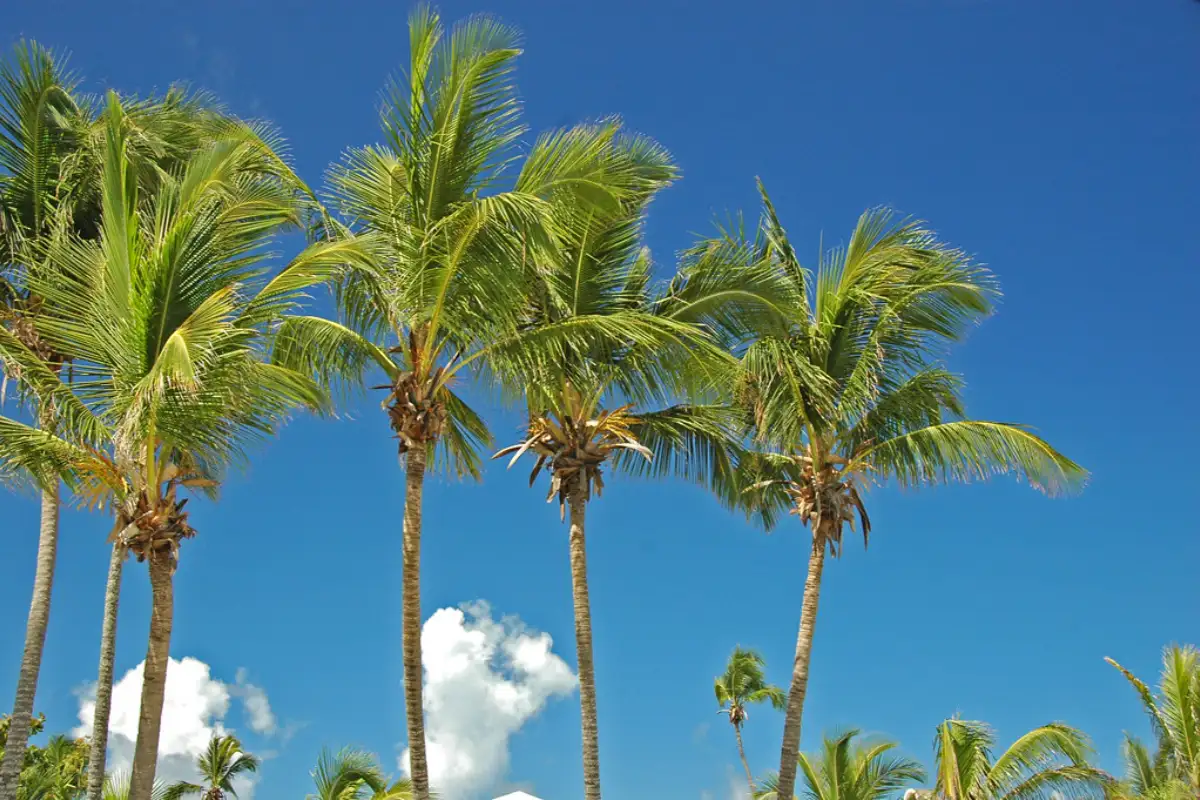
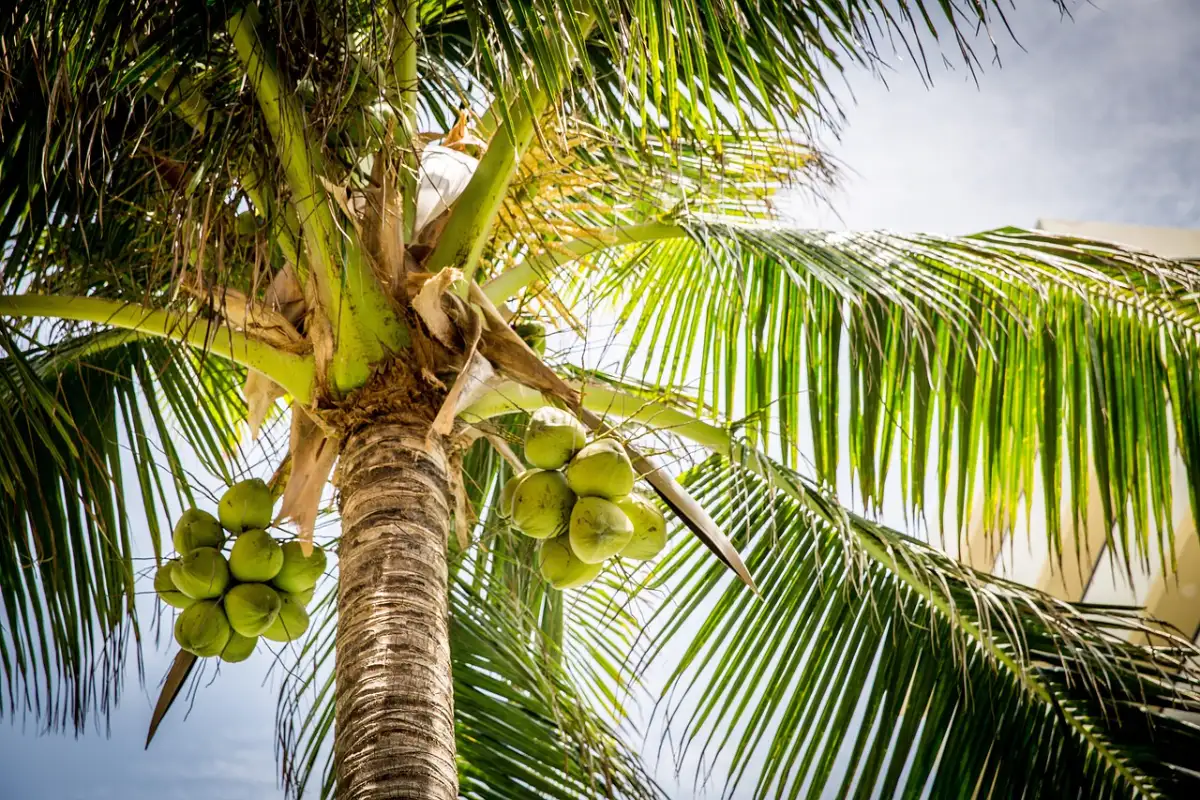
This tall, single-trunked, iconic Florida palm is well-known for its large, heavy, edible fruit. Coconut Palm (Cocos nucifera) has a leaning trunk with arching fronds, and thrives in well-drained, sandy soils.
This palm is a staple of South Florida’s coastal areas. It offers a quintessential tropical look and useful coconut fruits. Coconut Palm is highly sensitive to cold, making it ideal for USDA Zones 10b–11.
This palm is beautiful, but some consider it potentially invasive, as the heavy nuts can be a safety hazard if not thinned or harvested on time. Also, the Coconut Palm is susceptible to ‘Lethal Yellowing’ disease. This is why this palm requires maintenance.
Royal Palm
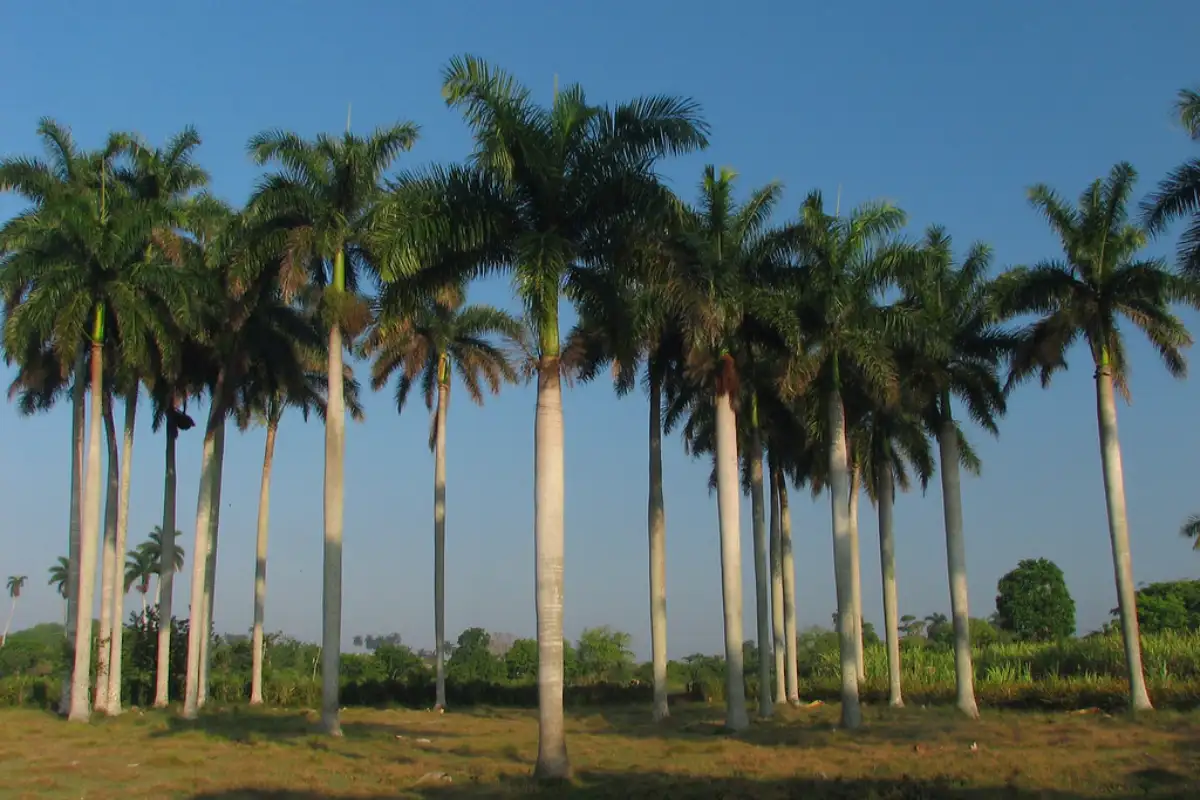
The Royal Palm (Roystonea regia), often referred to as the ‘King of Palms,’ has a strikingly tall, massive, smooth, gray trunk that often bulges at the base or mid-trunk. The trunk is topped by a dramatic canopy of long, green fronds – crownshaft.
Royal Palms can reach heights of about 60ft. to 80ft. This palm is low-maintenance and self-cleaning, as old fronds drop off on their own. While this offers convenience, it must be handled with care, as a single falling frond can weigh close to 50 pounds.
Royal Palms are perfect for creating grandeur in urban landscapes, driveways, avenues, and parks.
Queen Palm
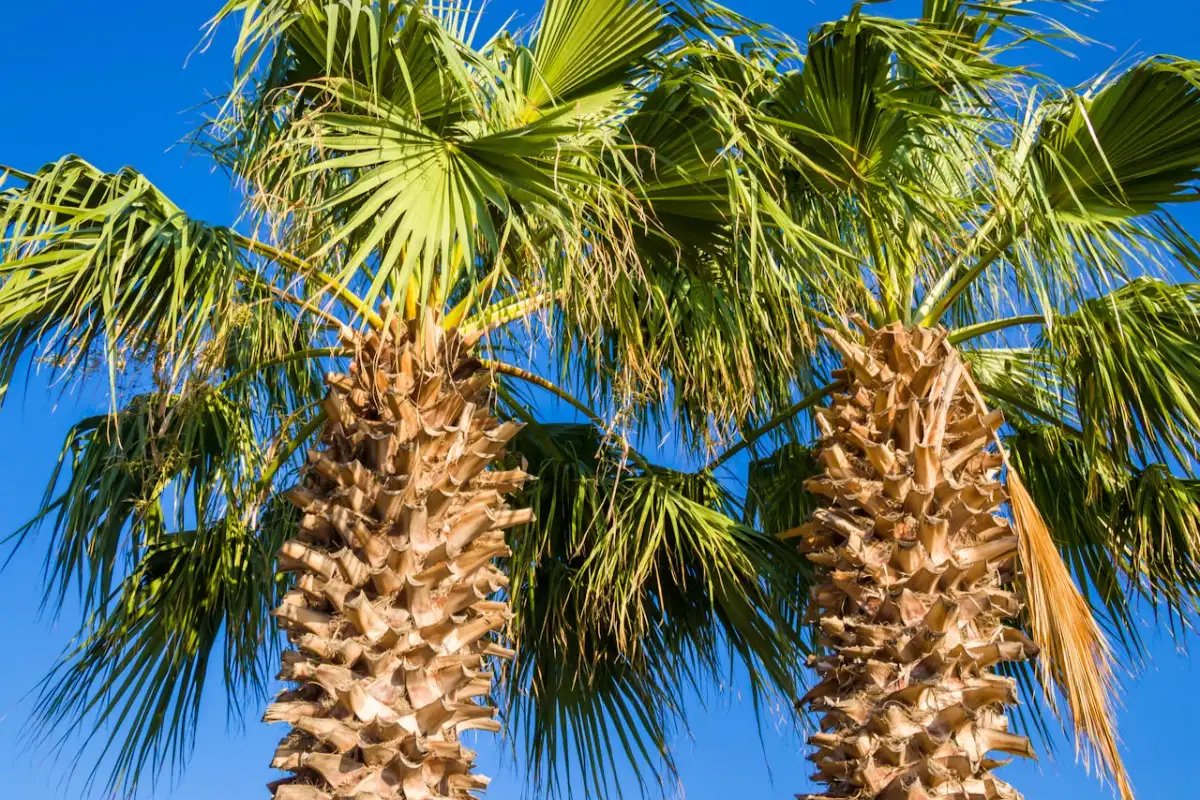
The Queen Palm (Syagrus romanzoffiana) is a popular non-native palm tree in Florida because it is fast-growing and affordable. It is also a tall, single-trunked palm, but has dark green, feathery fronds that can reach 12ft.
This fast-growing palm can grow quickly to about 30ft to 60ft. It produces creamy flowers, followed by clusters of orange, edible dates that can look messy on the ground.
Queen Palm is relatively low-maintenance once established. However, it requires regular nutrient care. Being a heavy feeder, Queen Palm requires regular applications of potassium and manganese to prevent frizzletop, an incidence where new leaves emerge stunted and scorched.
This palm is moderately cold-hardy in USDA Zones 9B-11 and can tolerate temperatures down to about 20°F to 25°F. However, its leaves can get damaged at these temperatures.
Areca Palm
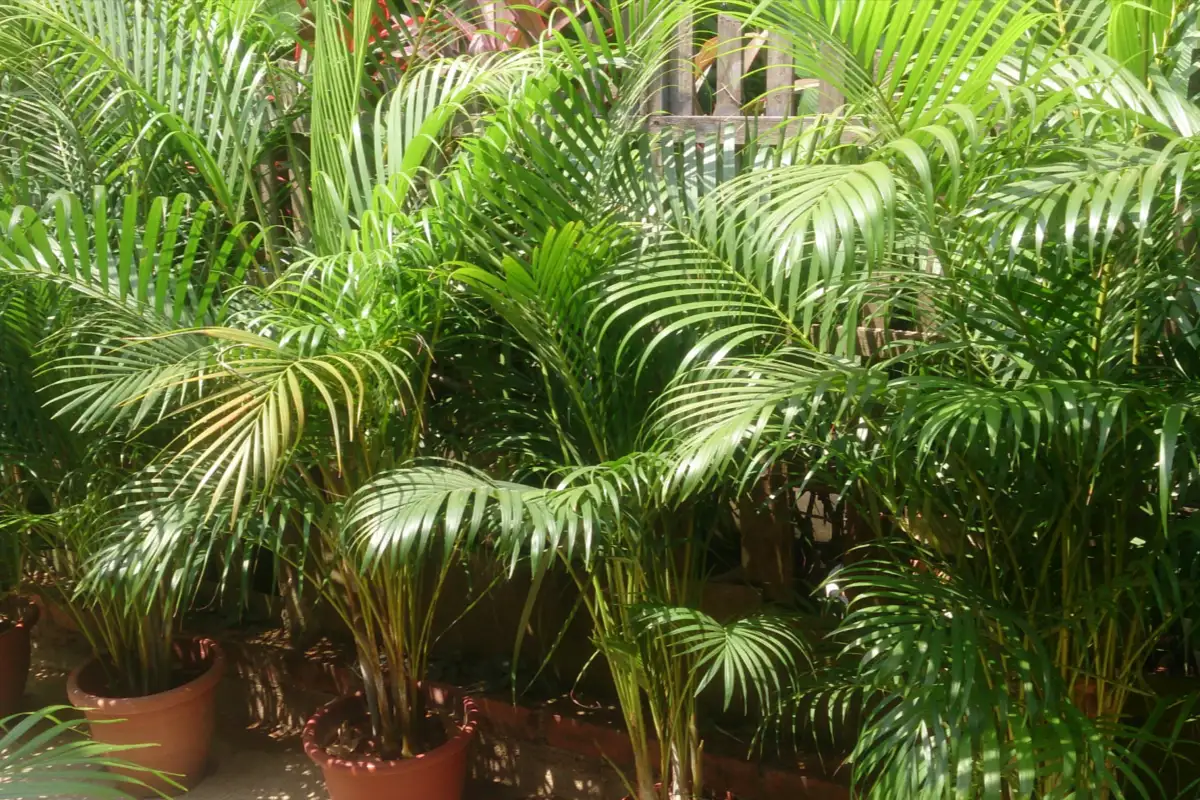
Areca Palm (Dypsis lutescens) is an attractive clumping palm that produces multiple golden-yellow stems. These stems create a dense, bushy screen appearance reaching 15ft. to 20ft., perfect for privacy screens or landscaping.
So, if you’re looking for a natural privacy fence, hedges, and screens, this palm is your best choice.
Areca Palm is highly versatile and can thrive in both shade and sunlight. However, this palm requires regular fertilization and watering to maintain its lush, yellowish-green foliage.
Foxtail Palm
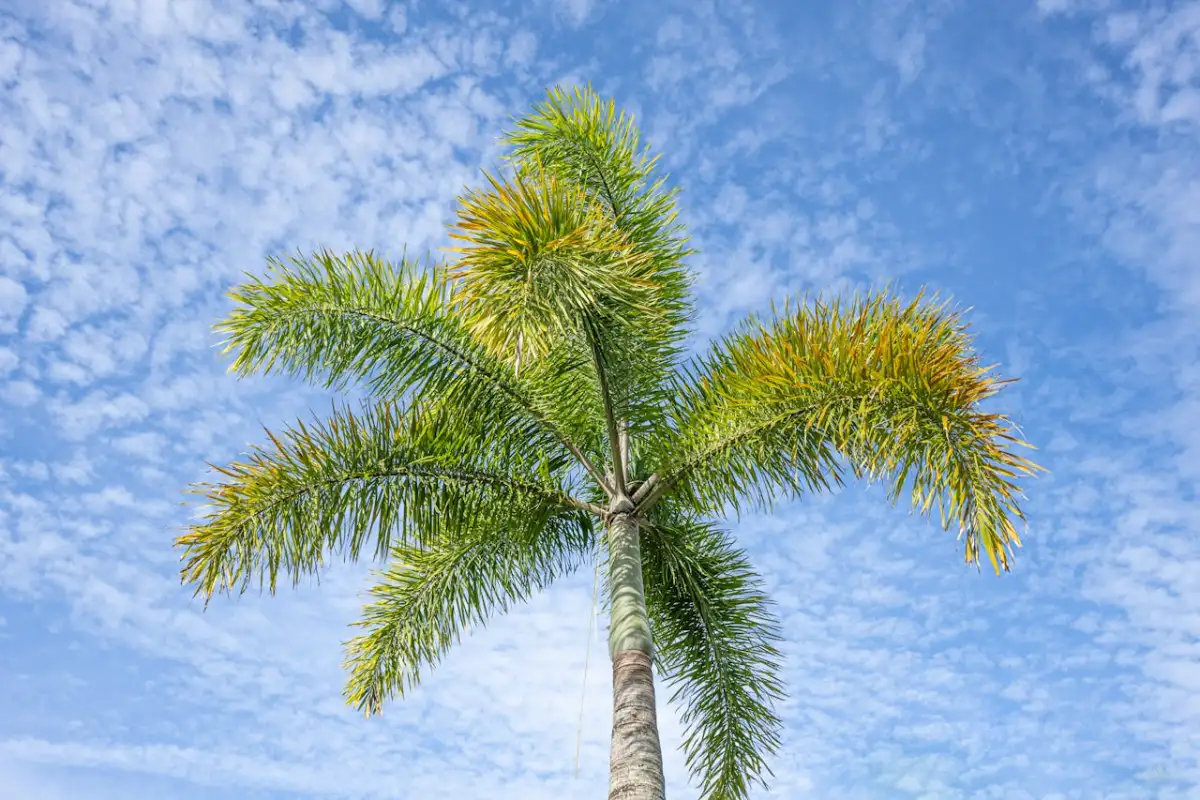
The last non-native palm on our list is the Foxtail Palm (Wodyetia bifurcata), well-known for its unique, bushy fronds that look like a fox’s tail. This feature makes this palm a decorative favorite.
While Foxtail Palm resembles Royal Palm with its self-cleaning, smooth trunk, and green crownshaft, it’s more compact. This fast-growing palm has a deep root system that makes it remarkably wind-resistant.
Hence, the Foxtail Palm is your ideal choice for coastal landscaping where wind resistance, a unique look, and distinctive texture are desired.
Tall Palm Trees in Florida
This section covers tall palm trees in Florida for creating a dramatic skyline. These tall palms couple their height with their ability to withstand the stresses of Florida’s wind and weather.
That makes these palms the primary architectural choice for estates, boulevards, and coastal resorts.
- Royal Palm: Just as the name depicts, this palm is arguably the most prestigious of the tall palm trees in Florida, reaching impressive heights of 60ft. to 80ft. It has a massive, smooth, gray, rigid trunk that looks like polished concrete, topped by a lush green crownshaft.
The impressive height makes Royal Palm a classic focal point for grand landscapes, estates, and parks. This palm is sensitive to cold and thrives best in Zones 10–11.
- Coconut Palm: Here is a palm with an iconic, edible, delicious, and nutritious fruit. The coconut fruit is a staple of the Florida Keys and coastal South Florida.
The Coconut Palm can grow to heights of 80ft. to 100ft., and the trunk has a characteristic leaning or curved posture – a natural adaptation for life.
This palm has a quintessential tropical look, prefers sandy soils and coastal conditions, and requires a frost-free climate to survive.
- Mexican Fan Palm: Another palm on our list of tall palm trees in Florida is the Mexican Fan Palm (Washingtonia robusta). It is often called the skyduster or skyscraper of the landscape, often reaching 70ft. to 100ft.
This fast-growing palm has a very slender trunk, large fan-shaped leaves with spiny stems, and a skirt of dead brown fronds that clings to the trunk.
The Mexican Fan Palm is much more cold-hardy than the Royal Palm or Coconut Palm, and can survive temperatures down to 20°F (Zone 9a).
Small and Dwarf Palm Trees in Florida
If tall palms aren’t your desire, there are also small palm trees in Florida, such as the Bottle Palm. These small palms are perfect for tight or limited spaces, for adding texture beneath a larger canopy, or for creating a tropical look without overwhelming landscapes.
- Pygmy Date Palm (Phoenix roebelenii): Reaching only 6ft. to 12ft. tall at maturity, the Pygmy Date Palm is one of the most popular small palm trees in Florida for entryways and pool decks. Its feathery, dark green fronds arch gracefully
This slow-growing, dwarf palm is often planted in triples (three trunks per spot) to create a lush, full multi-trunk appearance. It also has feathery, dark green fronds that arch gracefully.
This moderately cold-hardy palm prefers well-drained soil and full sun to part shade. Pruning is only needed to remove dead fronds, and it must be done carefully as this palm has sharp, needle-like spines at the base of its leaves.
- Dwarf Palmetto (Sabal minor): Reaching about 4ft. to 7ft. tall at maturity, this rugged palm is ideal for borders, mass plantings, or shady spots, offering a native, hardy option for smaller landscapes.
Unlike many other palm trees, Dwarf Palmetto has an underground trunk, giving the appearance of large, bluish-green fan leaves emerging directly from the soil.
This palm is exceptionally hardy and can tolerate both frost and poorly drained soil.
- Bottle Palm (Hyophorbe lagenicaulis): Just as the name suggests, the slow-growing Bottle Palm is well-known for its unique, swollen, bottle-shaped trunk.
This palm rarely grows beyond 10ft and usually holds only four to six fronds at a time, adding a distinct tropical charm. This makes Bottle Palm a sculptural statement plant for small gardens.
This palm is highly sensitive to cold and should only be planted in the ground in South Florida or Zones 10–11. If you live further North, plant it in a large, movable container.
| Palm Species | Height | Growth Rate | Notable Feature |
| Pygmy Date | 6ft to 12ft | Slow | Feathery; often multi-trunk |
| Dwarf Palmetto | 4ft to 7ft | Very Slow | Native; extremely cold-hardy |
| Bottle Palm | 5ft to 10ft | Very Slow | Swollen trunk; salt-tolerant |
Cold-Hardy Palm Trees for North Florida
South Florida typically enjoys a year-round tropical climate, but North Florida often faces winter frosts.
Fortunately, several cold-hardy palm trees in Florida can survive and thrive in cold weather. These palms provide excellent cold resistance for diverse, moist landscapes, making them ideal cold-hardy palms for the region.
- Windmill Palm (Trachycarpus fortunei): This non-native palm is well-known for its distinctive, slender, burlap-like, hairy, fibrous trunk that can grow up to 10ft. to 20ft.
Windmill Palm is extremely cold-tolerant, withstanding temperatures as low as 5° to 10°F. It can even withstand light snow, making it perfect for Zone 8A and colder areas of North Florida.
The Windmill Palm’s compact, fan-shaped fronds make the palm an ideal choice for tight spaces, smaller yards, or as an accent near entryways. Although Windmill Palm can tolerate a wide range of soil types, it prefers well-drained soil.
- Needle Palm (Rhapidophyllum hystrix): This palm is arguably the most cold-hardy palm for North Florida, surviving temperatures down to -5°F. Needle Palm is a tough, slow-growing palm, growing to about 6ft to 8ft in a shrub-like cluster.
At the base of the trunk, there are long, black, needle-like spines, hence the name Needle Palm. Being an understory plant, this palm thrives in shaded areas with moist soil. This makes Needle Palms suitable as fillers for woodland gardens and wet areas.
- Sabal Minor (Dwarf Palmetto): The Sabal minor, with a subterranean trunk, can withstand extreme cold, surviving temperatures down to 0°F. This palm has a subterranean trunk and can tolerate both extreme cold and ‘wet feet’ without getting rot.
It usually grows up to 6ft and is often found in the swampy, low-lying areas of North Florida.
How to Identify Florida Palm Tree Species

Identifying palm trees is important for understanding their specific traits and care needs. It helps to gain insights into the palm’s environmental requirements.
Luckily, Florida palm tree identification isn’t a difficult task. By examining these three key physical traits: trunk texture, leaf shape, and growth habit, you can identify almost any palm species you encounter in Florida.
Trunk texture
Observe the texture of the trunk. How does it look or feel?. Some palm trees, such as the Royal Palm, have smooth, cement-like trunks with horizontal rings.
Others, like the Sabal Palm, have a rough, diamond-shaped texture or crisscross patterns, created from old leaf bases.
Species such as the Windmill Palm have their trunk covered in dark, burlap-like fibers/hair, while some, like the Areca Palm, have multiple stems (clumping).
Aside from the trunk texture, also observe the trunk’s appearance. While most palm trees have a singular trunk, others, like the Needle Palm, can have multiple, shrubby trunks or even none at all, like the Dwarf Palmetto.
Leaf/frond shape (fan vs feather)
This is usually the primary and quickest way to identify and categorize a palm.
Some palms, such as the Sabal Palm and Mexican Fan Palm, have palmate fronds, where the leaves radiate from a single point like a folding fan or an open hand.
Others, such as the Queen Palm and Royal Palm, have Pinnate fronds, where the leaves have leaflets arranged along both sides of a central stem, like a bird’s feather.
Some palms, such as Joey and Miniature Fishtail Palms, have bi-pinnate fronds with multiple levels of leaflet divisions, giving them a unique look.
A few palms, such as the Blue Latan and Chinese Fan Palms, have costapalmate fronds, which are a hybrid between pinnate and palmate.
Height and growth habit
Palm tree heights vary dramatically across species. Note whether the palm has a tall, straight trunk, a tall, curvy trunk, a short, shrubby trunk, or a subterranean trunk.
Also, check if the palm has a solitary trunk like the Coconut Palm or is multi-stemmed like the Areca Palm.
Observing and understanding these key physical traits can help accurately identify Florida palm trees. This knowledge will not only aid in palm identification but can also inform care practices more suited to each palm’s specific needs.
Choosing the Right Palm Tree for Your Landscape
Choosing the right Florida palm trees for landscaping goes beyond just picking an attractive frond or trunk texture at the nursery. No, it’s about matching the tree’s biology to the specific microclimate of your yard.
If you choose a palm that matches your landscape’s specific conditions, it will thrive for decades with minimal intervention. Here are key factors to consider:
- Space and mature height: Consider the palm’s mature height and weight, and match them to the space in your yard. Also consider the canopy spread of your chosen palm species.
Choose small palms, like the Bottle Palm, for containers, and large ones for large areas. This prevents future conflicts with structures.
For instance, the Mexican Fan Palm looks cute in a three-gallon pot, but it will eventually grow up to 80ft., potentially interfering with structures.
- Sun vs. shade requirements: Most palms require sunlight; however, check your chosen species to see if it prefers full sunlight or is shade-tolerant.
Species, such as Dwarf Palmetto and Lady Palm, prefer filtered light and may scorch or turn yellow if placed in direct or full sunlight.
- Soil drainage and salt exposure: Most palm species require well-draining soil to avoid root rot. For such, amend heavy clay with sand to prevent root rot.
Whereas species like the Dwarf Palmetto and Sabal Palm are more water-tolerant and can tolerate poorly drained soil. If you live in coastal Florida or within five miles of the ocean, choose salt-tolerant palms like the Cabbage Palm.
Common Problems with Palm Trees in Florida

Although many palm species in Florida are low-maintenance, you still need to keep a watchful eye, as Florida’s humid environment and sandy soil present specific challenges, which include:
Nutrient deficiencies: Due to the state’s low-nutrient, sandy soils, palms often suffer from deficiencies in potassium, magnesium, and manganese. These nutrients are often lost through leaching during heavy rains.
Potassium deficiency causes necrotic tips or yellow-orange or bronze spotting on older fronds. Magnesium deficiency causes lemon-yellow bands to appear along the edges of older fronds. Manganese deficiency causes new fronds to appear scorched, stunted, or deformed, also called frizzle top.
Pests and diseases: Pests such as whiteflies, spider mites, and palm weevils often infest weakened palm trees. These pests can eat into the heart of the palm, causing the canopy to collapse.
Lethal Bronzing, Lethal Yellowing, and Ganoderma Butt Rot are serious, often fatal, incurable diseases of Florida palms.
These diseases are spread by insects and cause a rapid decline. Once any of these diseases appear on your palm, the best solution is to remove the palm tree.
Overwatering or poor drainage: Most Florida palms love humidity, but not all are water-resistant or can withstand drought and poor drainage.
Overwatering such palms or planting them in heavy clay without proper drainage can lead to wet feet (root rot). Nevertheless, newly planted palms should be properly watered to keep their root balls consistently moist and prevent desiccation.
Final Thoughts — Picking the Best Palm Tree for Your Florida Yard
Florida has diverse palms, from the hardy native Sabla Palm to colorful ornamentals like the Lipstick Palm, offering options for every landscape.
However, success relies on balancing the palm’s features and maintenance needs with the specific microclimate of your yard – sun, space. This will enable you to provide consistent, specific care, ensuring your chosen palms thrive for years.
Before getting started, always verify the palm tree’s mature height and cold tolerance. This will enable you to pick the best palm tree for your Florida yard without interfering with structures. Also, match the right palm to your soil type and sunlight levels to create a low-maintenance grove that thrives for generations.
If it’s your first time, we highly recommend starting with proven native species like the Sabal Palm or Saw Palmetto. These varieties are naturally adapted to Florida’s climate, requiring less maintenance and intervention than exotic imports.
Frequently Asked Questions (FAQs)
The most common palm tree in Florida is the Sabal Palm (also known as the Cabbage Palm). It is Florida’s official state tree and is well-known for its hardiness in diverse conditions. Other common palms include the Saw Palmetto, Foxtail, and Royal Palms.
No, not all palm trees in Florida are native. Although Florida has about 12 native palm species, most palms seen in landscapes, such as the Royal Palms and Areca Palms, are exotic, though some have naturalized.
The primary challenge in North Florida is winter frost. So, any cold-hardy palm trees that can survive very low temperatures will grow best in North Florida?
This often depends on the palm species and the growing zone. While some Florida palm trees remain low-growing shrubs, others can grow to nearly 100ft.
For small yards, the best palm trees are slow-growing or dwarf species that won’t interfere with structures. These palms, such as the feathery Areca Palm and Bottle Palm, stay below 15ft. and offer a high-end look. They are even suitable for pots or tight garden spots.