

Do you want to improve the curb appeal of your environment, whether it’s your home, garden, or immediate surroundings, and are looking for the best trees to plant near a house?
- Why Tree Placement Near a House Matters
- Shade Benefits and Energy Savings
- Root Damage to Foundations and Pipes
- Roof, Gutter, and Siding Concerns
- What Makes a Tree Safe to Plant Near a House?
- Best Trees to Plant Near a House (Top Picks)
- Japanese Maple (Acer palmatum)
- Dogwood (Cornus spp.)
- Redbud (Cercis canadensis)
- Crape Myrtle (Lagerstroemia indica)
- Serviceberry (Amelanchier spp.)
- Amur Maple (Acer ginnala)
- Bay Laurel (Laurus nobilis)
- Best Shade Trees Near a House (That Won’t Cause Damage)
- Eastern Red Maple (dwarf varieties)
- Honey Locust (Gleditsia triacanthos var. inermis)
- Japanese Zelkova (Zelkova serrata)
- Small Trees for Planting Close to a House
- Trees to Avoid Planting Near a House
- How Far Should Trees Be Planted from a House?
- Climate and Soil Considerations
- Final Thoughts — Choosing the Right Tree for Your Home
- Frequently Asked Questions (FAQs)
Planting trees near your house offers several benefits, such as shade, privacy, and a beautiful landscaping accent. However, choosing the right tree to plant requires more than just an eye for aesthetics.
While the right trees offer a lush canopy that can boost property value and provide natural cooling, planting the wrong trees can lead to structural disasters that are incredibly costly to repair.
So, what kind of trees can you plant near your house that won’t lead to structural issues?
You’re in luck. In this guide, we have seven of the best trees to plant near a house for beauty, privacy, and shade that will not damage your structure or foundation. These trees have non-invasive roots and are perfect for safe, low-risk landscaping.
Why Tree Placement Near a House Matters
While trees add undeniable beauty to your home, they can also become structural hazards that can cause significant, costly damage.
Hence, proper tree placement is an important aspect of home landscaping that balances aesthetic appeal with structural safety. Here are a few reasons why tree placement near your house matters:
Shade Benefits and Energy Savings
Proper tree placements, especially on the south and west sides of a home, offer shading and substantial energy-saving benefits.
If well placed, trees, especially deciduous ones, provide a leafy shield that acts as a natural thermostat. They provide summer shading, reducing AC/cooling costs by up to 35%.
In winter, these trees shed their leaves, allowing sunlight to provide free solar heating and aiding natural heating.
Root Damage to Foundations and Pipes
It isn’t all about benefits; poor tree placement can pose significant risks. For instance, trees are living organisms that grow both above and below ground.
Depending on the species, tree roots can spread significantly in search of moisture, extending beyond the canopy’s edge. For trees planted too close to a house, aggressive roots can infiltrate the foundation, causing structural instability.
Likewise, tree roots can threaten underground utilities, such as sewage and water pipes, leading to blockages, leaks, and bursts.
Roof, Gutter, and Siding Concerns
While branches can act as leafy shields, tall, overhanging branches can damage the roof, gutters, and siding through abrasion, wearing down protective shingles.
Also, during storms, falling branches can puncture roofs, shatter windows, and damage gutter systems. Moreover, falling debris – leaves, sap, and needles – often clogs gutters, leading to water backup and roof deterioration.
To wrap it up, tree placement near your house is very important. We recommend maintaining a safe distance of about 10ft. to 20ft. for small trees and over 20ft. for large trees.
What Makes a Tree Safe to Plant Near a House?
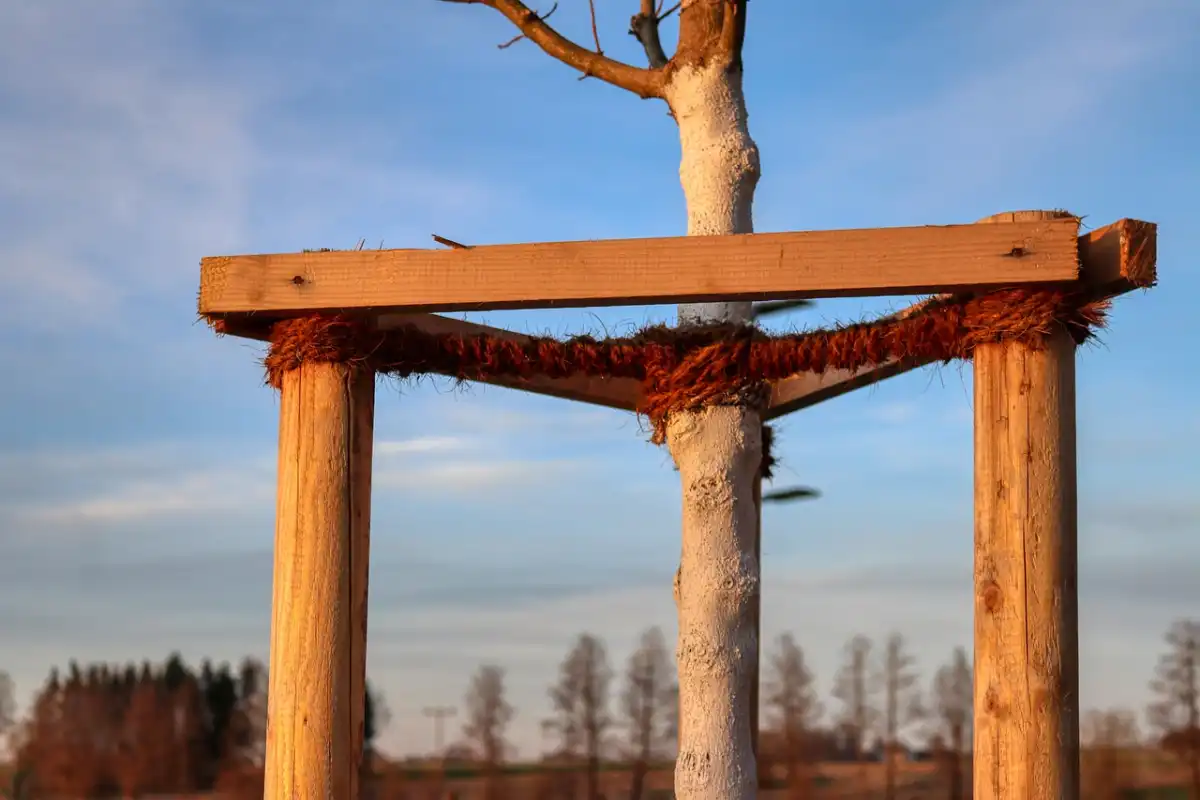
Before we delve into the top picks of trees safe to plant near a house, let’s consider the factors that make a tree safe to plant near a house.
Root System Behavior
The most important factor to consider is the root system behaviour. Most tree roots spread horizontally to seek water and nutrients.
However, trees with aggressive lateral roots can exploit your foundation or plumbing fixtures to find water. Whereas trees with non-invasive roots that do not spread aggressively are safe to plant near structures.
We recommend prioritizing trees with non-invasive roots, especially those with compact, fibrous root systems or deep taproots. These types of root systems grow downward rather than laterally, staying safe within their designated area.
Mature Height and Canopy Spread
The next important factor to consider is the tree’s mature height and canopy spread, which help protect your roof and siding.
A general rule of thumb is to plant small trees under 25ft. mature height 8ft. to 10ft. away from the building wall. Medium trees with a mature height of 25ft. to 40ft. require a minimum spacing of 15ft. to 20ft. away.
Keeping the outermost circumference of the canopy away from the house prevents moisture buildup on your siding. It also keeps squirrels and other pests from using your roof as a private highway.
Growth Rate and Maintenance Needs
The last significant factor is the tree’s growth rate and maintenance needs. Generally, slower-growing trees are better as they develop denser, stronger wood that is less likely to snap during storms.
In addition, slower-growing trees allow for more time to manage their growth and potential impact.
Fast-growing trees, on the other hand, are often weak-wooded species prone to snapping during storms. Notwithstanding, regular maintenance, such as strategic pruning, can control the size and direction of growth, ensuring the tree remains beneficial rather than a menace.
Nevertheless, opting for resilient, low-maintenance tree species can further minimize potential problems down the line.
Best Trees to Plant Near a House (Top Picks)
Here are the 7 best trees to plant near a house for beauty, privacy, and shade. These trees are beautiful and make the list because of their low-maintenance, less-invasive roots, and easy cleanup nature.
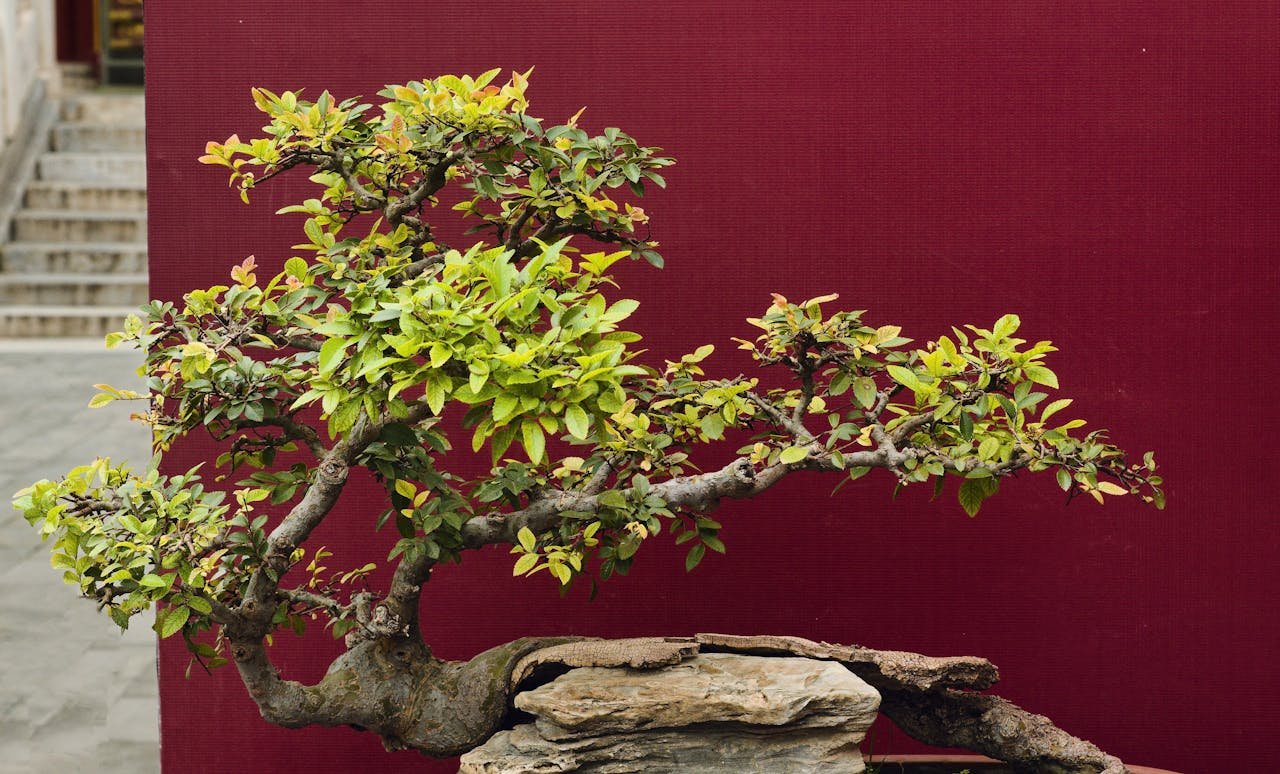
Japanese Maple (Acer palmatum)
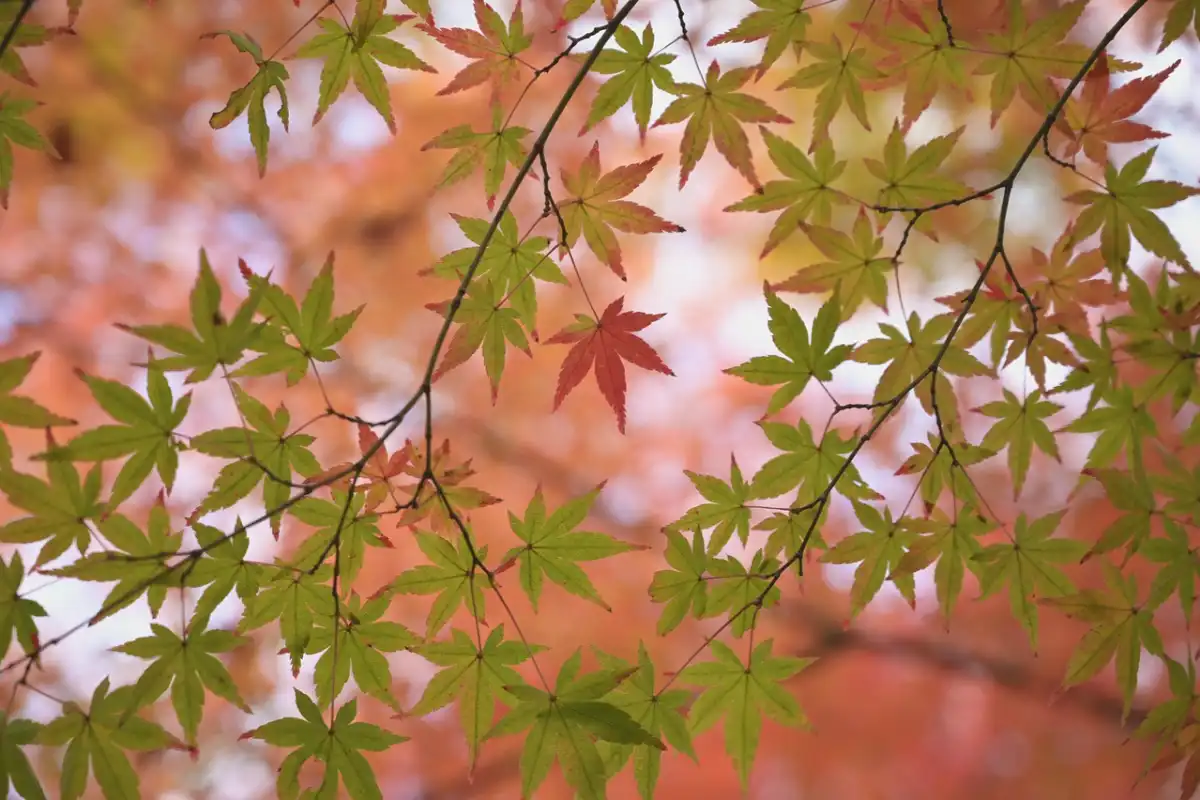
The Japanese Maple is a slow-growing, small-sized tree that typically grows anywhere from 15ft. to 25ft. It has a non-aggressive root system that is also relatively compact and shallow, making it an excellent choice to plant near your house.
That means you won’t need to worry about the Japanese Maple eventually towering over your house or their roots damaging your foundation or walkway.
- Why it’s safe: The Japanese Maple has non-thirsty, non-aggressive roots.
- Aesthetic appeal: It has delicate, lace-like leaves and stunning autumn shades of orange and crimson.
- Placement: This tree is ideal for accenting front yards, walkways, and patios with limited space.
If you’re considering a Japanese Maple, it’s important to note that it requires well-draining, loamy soil and thrives in partial shade to full sun. Prune it regularly to remove dead branches and keep it healthy.
Dogwood (Cornus spp.)
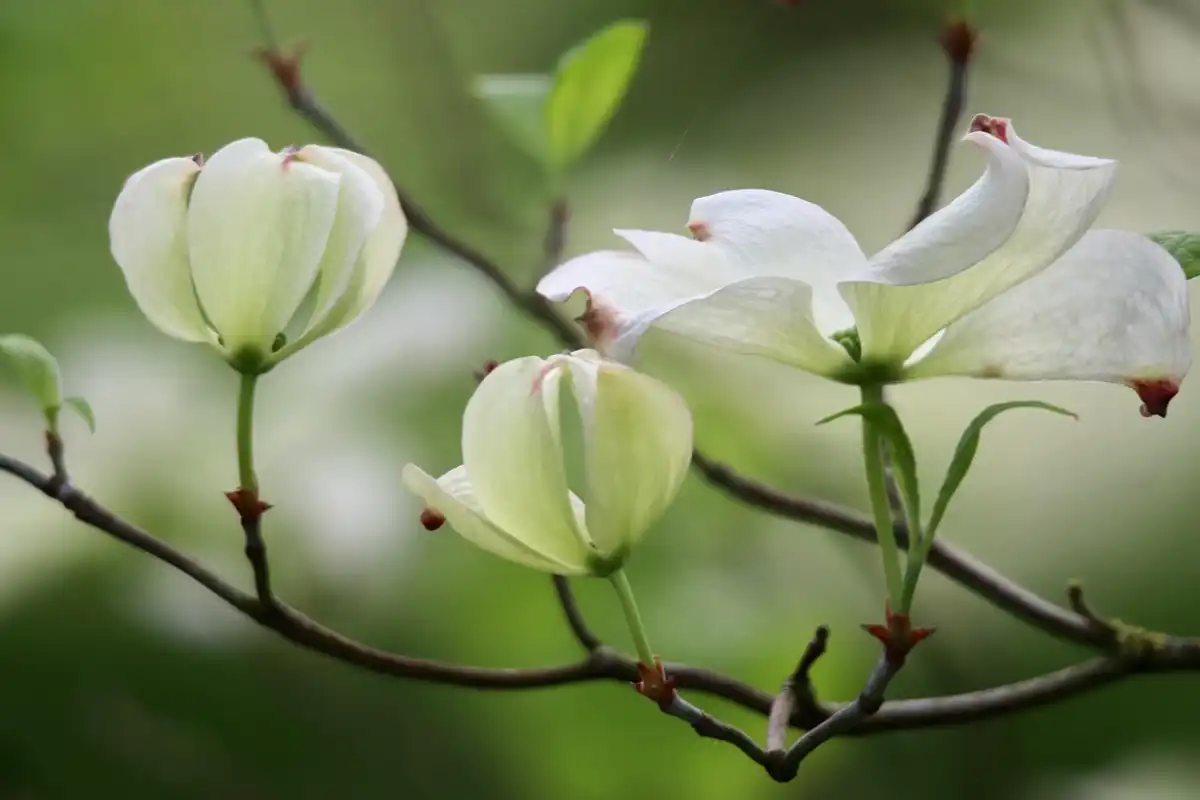
Dogwood, whether Cornus florida or Cornus kousa, is another popular option for homeowners looking to plant a tree near their house.
Dogwood’s shallow, non-invasive root system stays in the upper soil layers rather than penetrating deep into your pipes. So, the roots are unlikely to cause foundation issues or dive into your pipes, especially when planted at least 10ft. away.
Also, most Dogwood species mature at 15 to 30 feet, making them good understory trees.
- Why it’s safe: The shallow, well-behaved roots mean less risk to structures, such as walkways and masonry.
- Aesthetic appeal: This tree provides four seasons of interest: cream, white, or pink spring bracts; lush summer greens with glossy red fruits; red fall foliage; and alligator-skin bark in winter.
- Placement: It’s perfect for corner plantings or as an understory tree.
If you want a slightly hardier tree with better disease resistance, choose the Kousa species.
Redbud (Cercis canadensis)
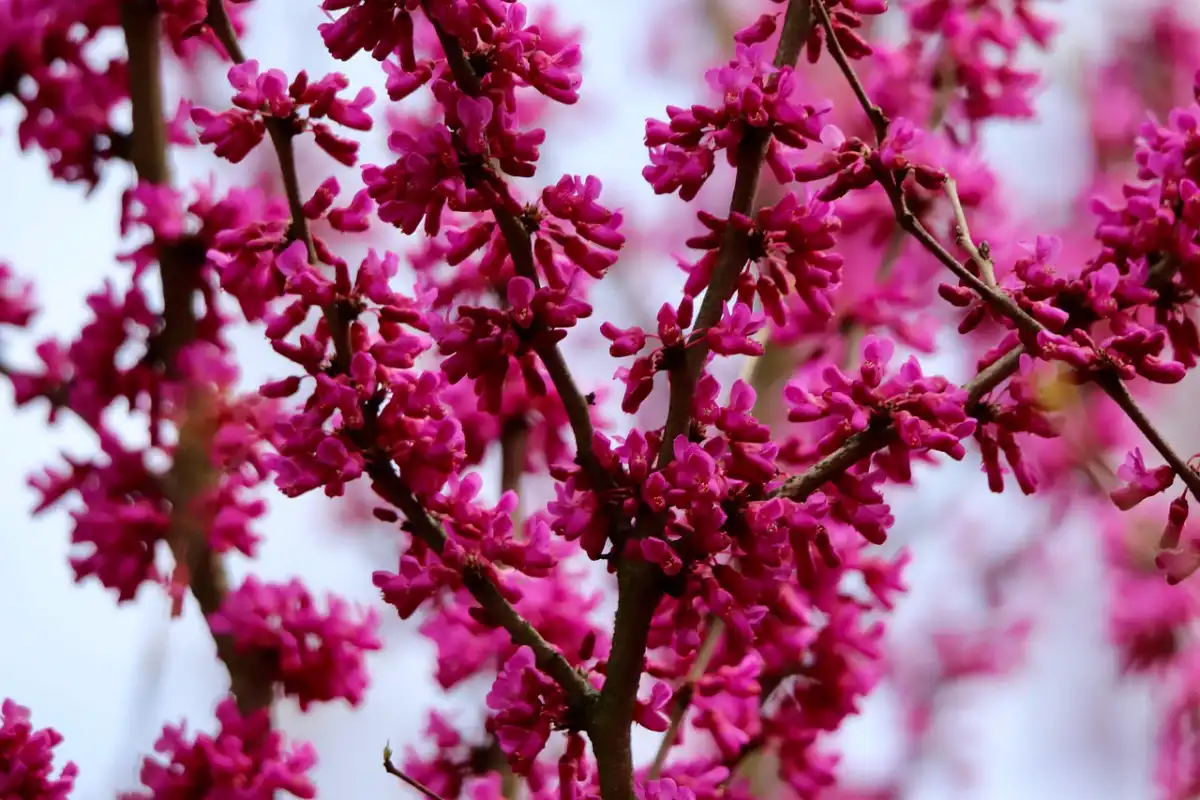
The Redbud is a fantastic native option, well-known for its early spring blooms. So, if you want to grasp the first sign of spring right outside your window, this tree is your best choice.
It also has a manageable size, growing to about 20ft. to 30ft. only.
Although the Redbud has wide-spreading roots, it is not considered invasive or aggressive to foundations, provided it is given a little space.
- Why it’s safe: The Redbud has a mixed root system – a mix of a deep taproot and shorter lateral roots. This reduces the likelihood of structural issues.
- Aesthetic appeal: The brilliant pink or purple flowers bloom directly on the bark before the heart-shaped leaves even appear in spring.
- Placement: It works well close to foundations or as a focal point.
Crape Myrtle (Lagerstroemia indica)
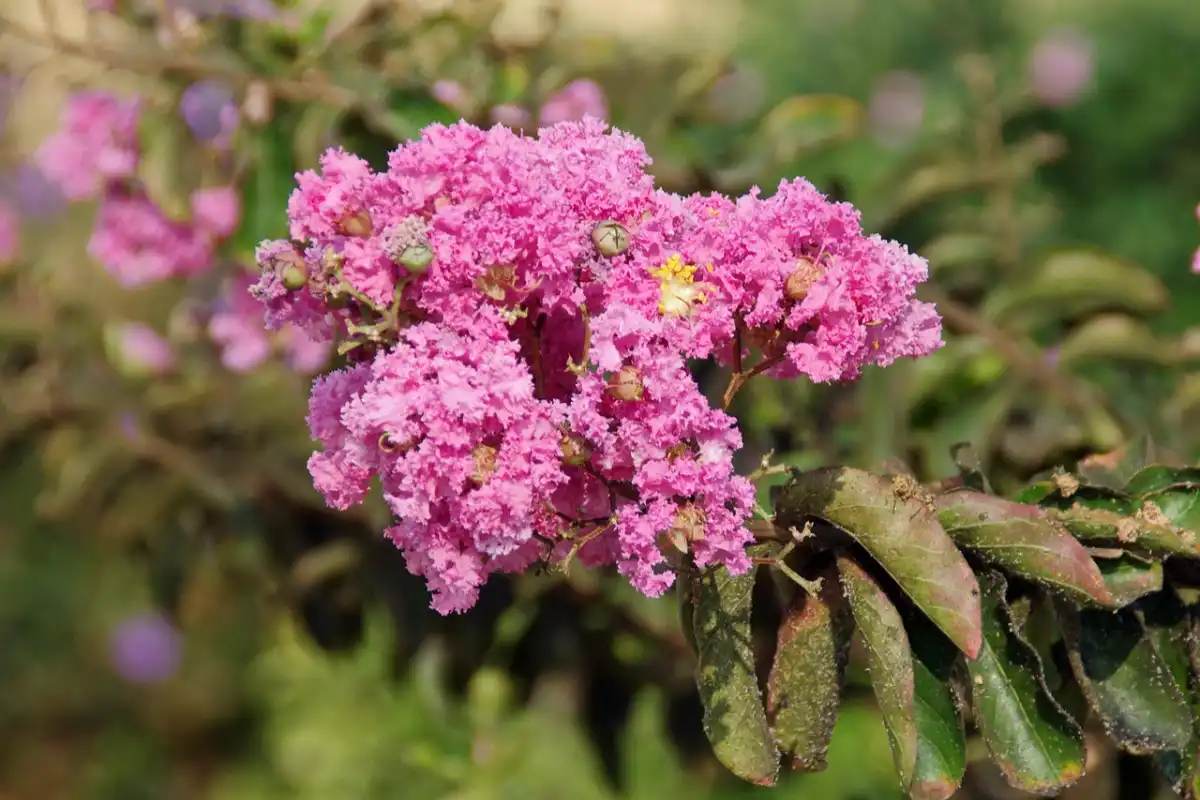
The Crape Myrtle, often called the “lilac of the South,” is a brilliant option for those in warmer climates. It is a low-risk, incredibly heat-tolerant tree that thrives in the reflected heat of a house wall.
This tree has minimal, shallow, and non-aggressive root spread, making it safe for small spaces.
- Why it’s safe: Though the Crape Myrtle has a fibrous root system that spreads outward, it lacks the muscle to crack foundation walls.
- Aesthetic appeal: It offers long-lasting summer blooms in white, pink, red, or purple, as well as unique peeling bark that adds winter texture.
- Placement: It can be planted near walls or patios, as it can be easily pruned into small tree or multi-stemmed shrub forms.
Serviceberry (Amelanchier spp.)
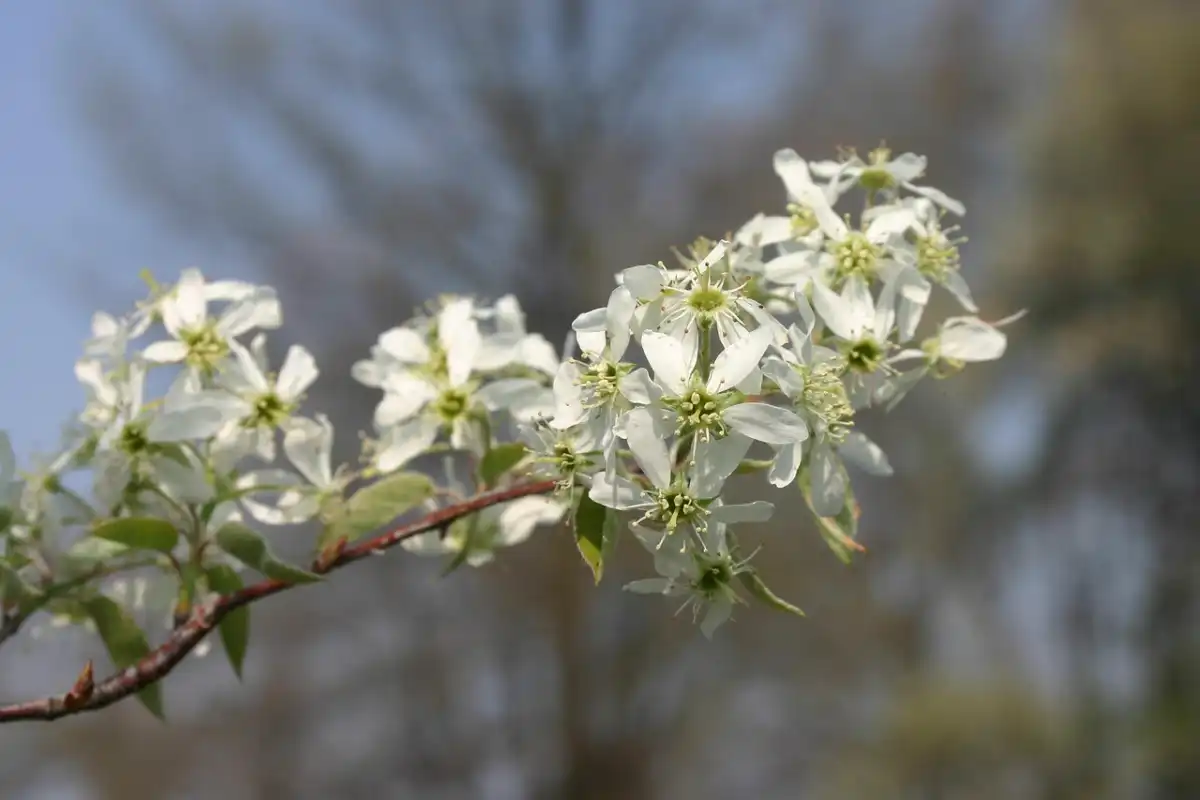
Serviceberry is a small, multi-stemmed tree that offers remarkable multi-season interest. It has a small, shallow root system, making it suitable for tight spaces. Also, it is exceptionally hardy and stays quite compact, rarely exceeding 20ft. in height.
- Why it’s safe: Their roots are non-aggressive, making them ideal for tight spaces between the house and the driveway.
- Aesthetic appeal: It yields white spring flowers, edible berries in summer (June), and bright orange-red fall foliage in fall.
- Placement: It is an ideal choice for small, intimate front yard spaces.
Amur Maple (Acer ginnala)
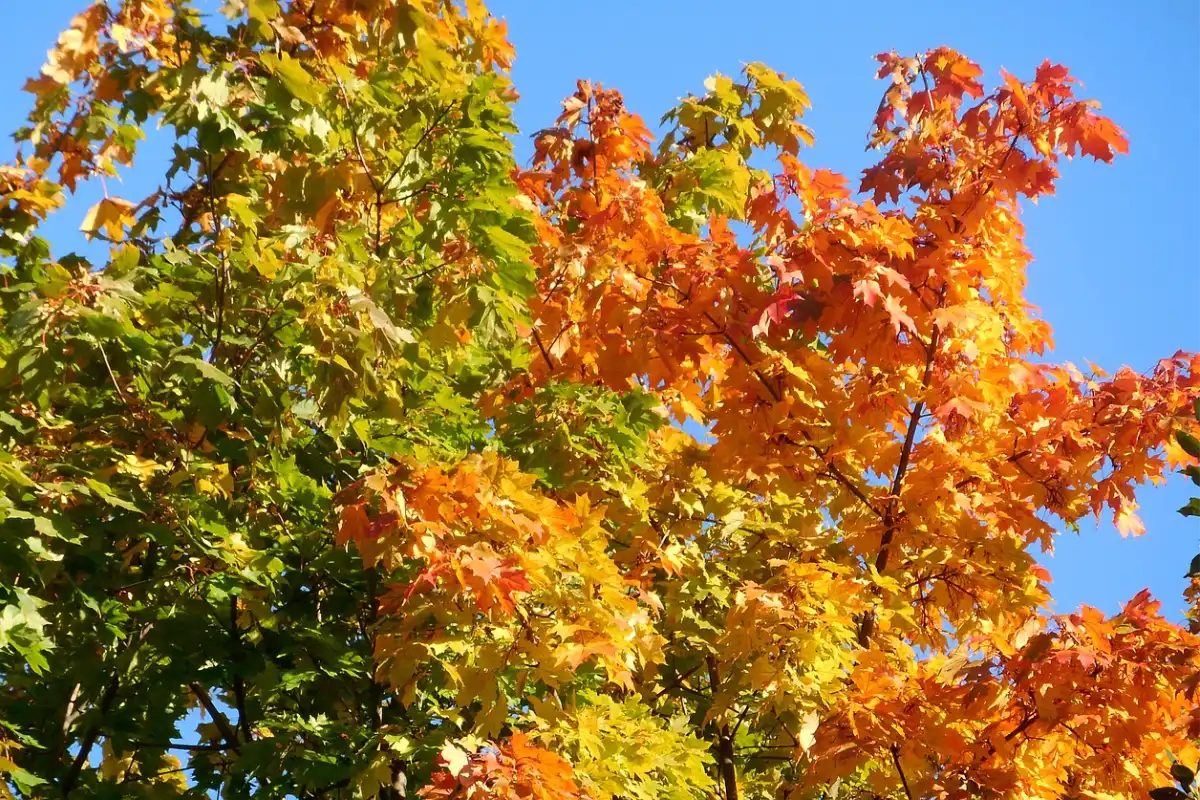
If you’re living in a colder region, the Amur Maple is an ideal option. It is significantly more drought and cold-tolerant than many other decorative maples.
This tree is rugged, very durable, and maintains a compact growth habit. It is slow-growing and usually tops out at 15ft. to 20ft., bringing a massive punch of color to small yards.
- Why it’s safe: It maintains a very compact growth habit, avoiding the sometimes problematic nature of other maple trees.
- Aesthetic appeal: It has excellent red fall color that rivals that of any larger maple.
- Placement: Best planted as a small specimen tree or for privacy screening near the house.
Bay Laurel (Laurus nobilis)
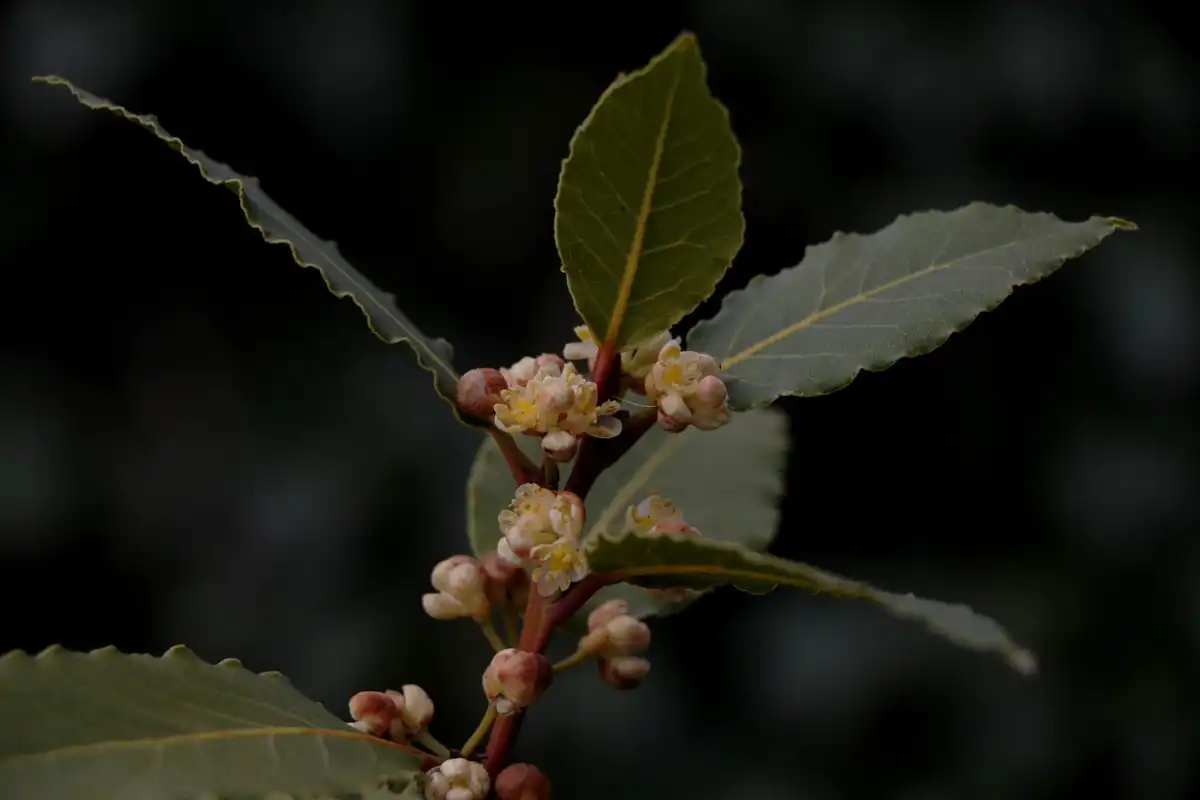
Just like the Crape Myrtle, the Bay Laurel is an excellent, sophisticated, evergreen choice for homeowners in warm climates (Zone 8+).
It has a non-aggressive root system, which poses less risk to ground/underground structures. However, the tree branches can technically grow large over many decades.
Luckily, the tree has a slow growth rate, is easy to manage, and can be pruned to size, allowing you to tailor it to your specific spot.
- Why it’s safe: The Bay Laurel is slow-growing and responds exceptionally well to pruning. That means the tree is manageable and can be sized to your specific spot.
- Aesthetic appeal: It yields glossy, dark-green leaves that provide year-round privacy and a formal look.
- Placement: It is often used for topiary and hedging.
| Tree Species | Mature Height | Root Risk | Best Feature |
| Japanese Maple | 15ft. to 25ft. | Very Low | Ornate foliage |
| Dogwood | 15ft. to 30ft. | Low | Spring blooms |
| Redbud | 20ft. to 30ft. | Low | Heart-shaped leaves |
| Crape Myrtle | 10ft. to 25ft. | Low | Heat tolerance |
| Serviceberry | 15ft. to 20ft. | Low | Multi-season interest |
| Amur Maple | 15ft. to 20ft. | Low | Intense fall color |
| Bay Laurel | 10ft. to 30ft. when pruned | Low | Evergreen / Culinary |
Best Shade Trees Near a House (That Won’t Cause Damage)
Listed above are the best trees to plant near your house. However, here are the best shade trees near homes to consider for lower utility bills. These trees offer cooling summer shade without structural risk.
Eastern Red Maple (dwarf varieties)
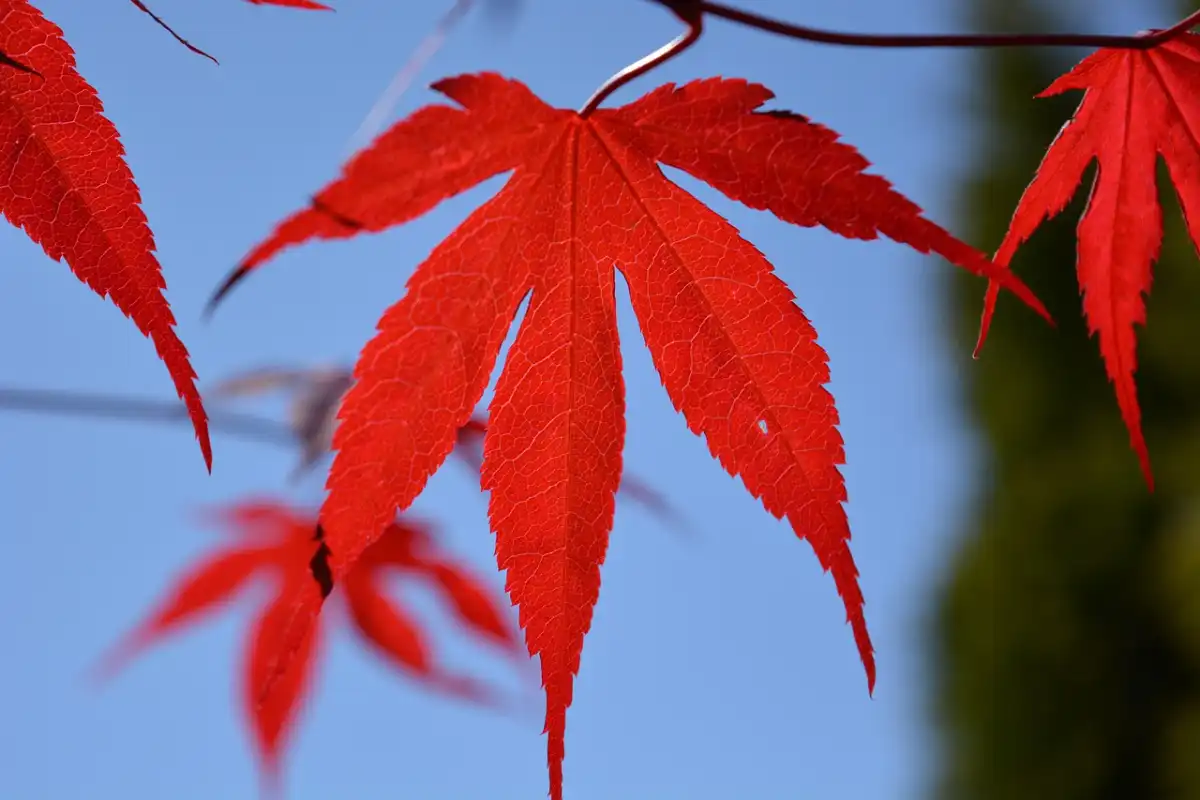
The native Eastern Red Maple (Acer rubrum) is generally a large canopy tree, well-known for damaging foundations. However, there are several slow-growing, dwarf, and compact varieties for small spaces.
These dwarf varieties include the Dwarf Eastern Red Maple (Acer rubrum cultivars), the Dwarf Red Japanese Maples (Acer palmatum), and the Armstrong or Bowhall cultivars.
They offer striking, delicate foliage for shade and deep, non-invasive root systems. They rarely grow larger than 10ft. to 15ft. tall and are ideal for planting within 10ft. to 15ft. of a foundation.
Honey Locust (Gleditsia triacanthos var. inermis)
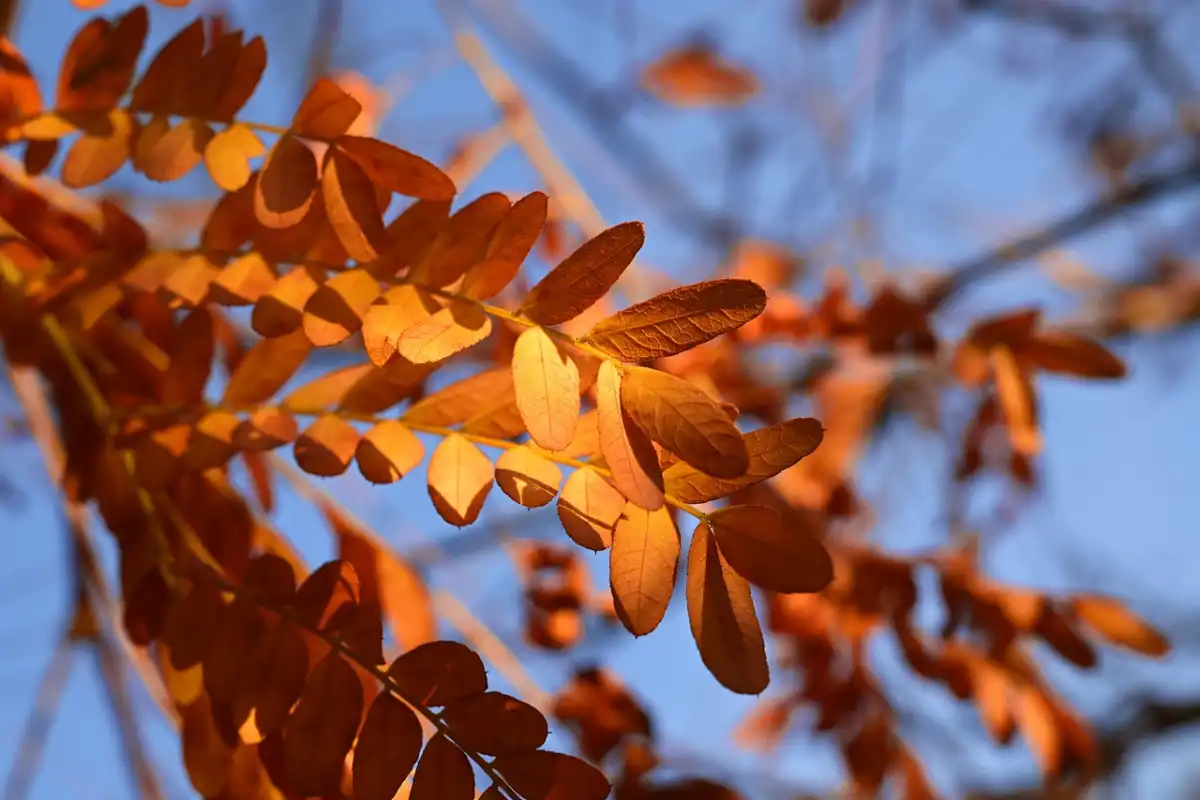
Honey Locust is an excellent choice for larger, dappled shade. The polite root system prevents messes or damage to your structure or plumbing fixtures. It has tiny leaflets that filter sunlight, providing filtered shade. The small leaves decompose quickly, saving you from having to clean up.
Varieties like Shademaster and Sunburst are fast-growing and have a deep taproot system, making them safe to plant near sidewalks and patios.
Japanese Zelkova (Zelkova serrata)
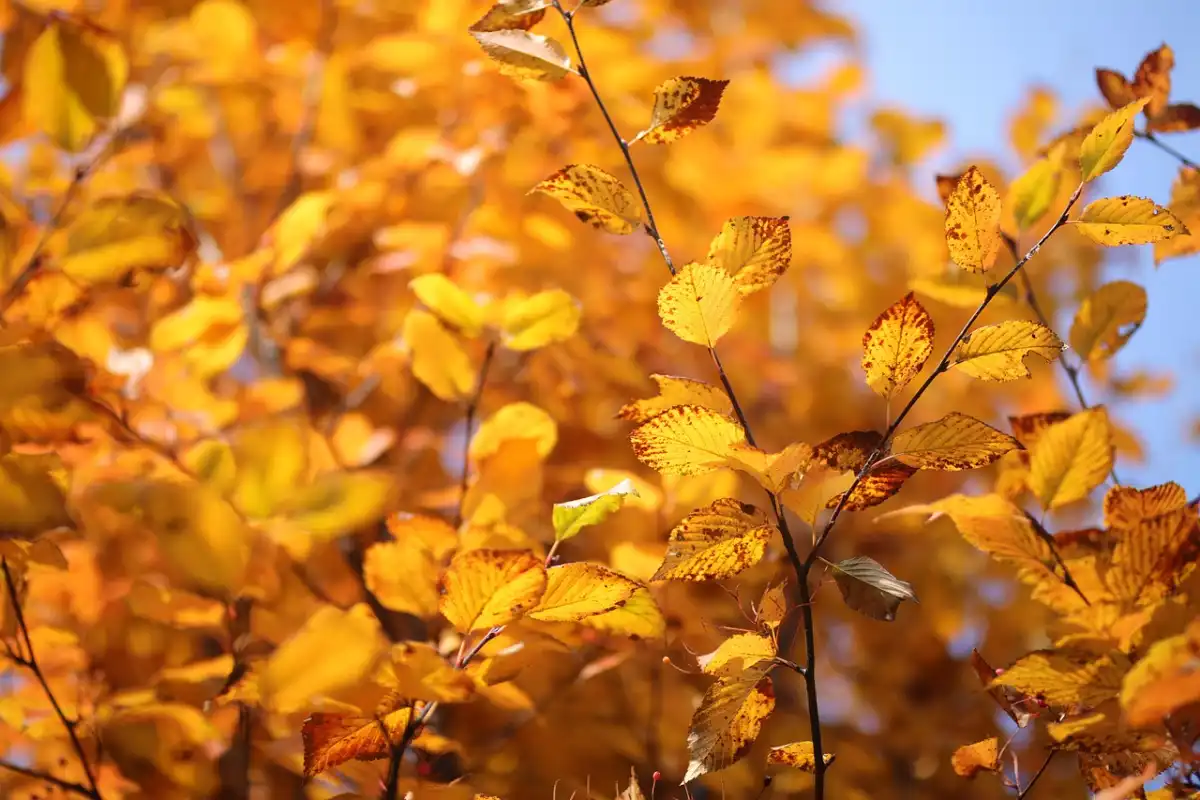
The Japanese Zelkova is a tough, incredibly hardy, vase-shaped tree that grows well in restricted soil spaces.
The trunk and base are manageable, while the branches spread wide above the roofline, offering dense shade and blocking the harsh afternoon sunlight as they mature.
This tree has a fibrous and non-invasive root system, making it a safe choice near structures. It is highly adaptable to soil types and resistant to most common urban pests.
Small Trees for Planting Close to a House
Planting small trees near a home offers significant advantages in terms of safety, maintenance, and structural integrity.
Small trees, typically with a maximum height under 25ft., provide the aesthetic and environmental benefits of landscaping without the risks associated with towering branches and large root systems.
Here are small trees ideal for tight spaces and front yards:
Japanese Maple: Often reaching 15ft. to 25ft., this small tree is ideal for tight spaces and front yards due to its slow growth, manageable size, and stunning fall color.
Crape Myrtle: This tree has many cultivars, all topping out at 10ft. to 25ft. Being incredibly heat-tolerant, this tree is ideal for small, sun-drenched, front-facing corners.
Crape Myrtle offers spectacular summer flowers and beautiful bark, which makes it a beautiful addition to your front yard.
Little Gem Magnolia (Magnolia grandiflora): This is a compact, evergreen tree that grows 20ft. to 25ft. high. However, it maintains its narrow shape, making it perfect for corners and narrow spaces.
Eastern Redbud (Cercis canadensis): Often reaching 20ft. to 25ft., the eastern redbud is notable for its spring, pink-purple flowers. The flowers make this tree excellent for adding dramatic color to your front yard landscaping.
Other small trees for the front yard include:
Star Magnolia, reaching just 15ft to 20ft, has a stunning explosion of white flowers in early spring. Paperbark Maple, reaching 25ft maximum height and known for its peeling cinnamon-colored bark.
All the small trees for front yards listed above will rather complement your home’s architecture than obscure it, providing curb appeal without the looming threat of heavy limb failure during a storm.
Trees to Avoid Planting Near a House

As much as possible, avoid planting the trees listed below near your house. These trees may look attractive, but their widespread, invasive root systems make them unsuitable to plant too close to your house or structure.
Willow (Salix species): Being an ultimate water seeker, Willow has an incredibly aggressive root system that can travel far distances in search of moisture. The roots can find very small cracks in septic tanks or sewer lines and expand until the pipe bursts.
Apart from the aggressive roots, Willow has brittle wood that snaps easily in high winds, posing a threat to your windows or roof.
Silver Maple (Acer saccharinum): Silver Maple is a fast-growing tree, but the fast growth comes at a price. The tree has powerful, shallow roots that can easily lift up driveways, sidewalks, and even patio stones.
Also, Silver Maple has weak wood that can crash down during ice storms or heavy summer thunderstorms.
Poplar (Populus spp.): Poplar shares the same thirsty personality with Willow. That means its root systems are far-reaching and invasive.
Because it drinks so much water, this tree is well known for causing soil subsidence, which can lead to foundation settling. Moreover, Poplar is a short-lived tree that becomes hazardous as it ages and decays.
Ficus (Ficus benjamina/macrophylla): Ficus has thick, muscular roots that are capable of lifting entire concrete walls or infiltrating even the smallest fractures in masonry.
Typically, aggressive roots can cause damage through two primary methods: physical pressure and moisture extraction.
As tree roots grow longer and thicker, they exert immense pressure on anything in their path, from utility lines to foundation structures.
Similarly, thirsty roots drink a lot of water. They can find very small cracks in septic tanks or sewer pipes and expand until the tank or pipe bursts.
They can also extract moisture from under your house, causing the ground to pull away or shrink. This often leads to structural settling, resulting in cracked drywall, stuck doors, and other costly repairs.
We recommend that once you find a tree you like to plant near your house, do a little research to see how fast-growing and invasive its roots could be.
How Far Should Trees Be Planted from a House?
Planting trees at the right distance away from a house is very important to avoid plumbing issues, foundation damage, and safety hazards.
As a general rule, trees should be planted at least 10ft. away from the foundation, though this depends heavily on the mature height. For instance, if a tree is 12ft. tall, its root system could be twice that size underground.
General spacing rules by tree size:
- Small trees (under 20ft.) should be planted 8ft. to 10ft. away.
- Medium trees (20ft. to 50ft.) should be planted 15ft. to 20ft. away.
- Large trees (over 50ft.) should be planted 20ft. to 50ft. away.
Also, when determining how far trees can be planted from a house, there are some critical considerations to make, such as:
The local soil conditions: This plays an important role and can significantly impact root growth. For instance, in compacted soils, tree roots may grow closer to the surface, causing more damage to shallow foundations and pavements.
In clay soils, thirsty roots can cause excessive drying, leading to soil contraction, subsidence, and foundation settlement.
Foundation and utility line: Large, fast-growing trees with invasive or aggressive roots can crack foundations and utility pipes. Avoid planting such trees within 10ft. of foundations, sewer lines, or utility lines.
Also, large trees should be placed far enough to prevent branches from damaging the roof.
Climate and Soil Considerations
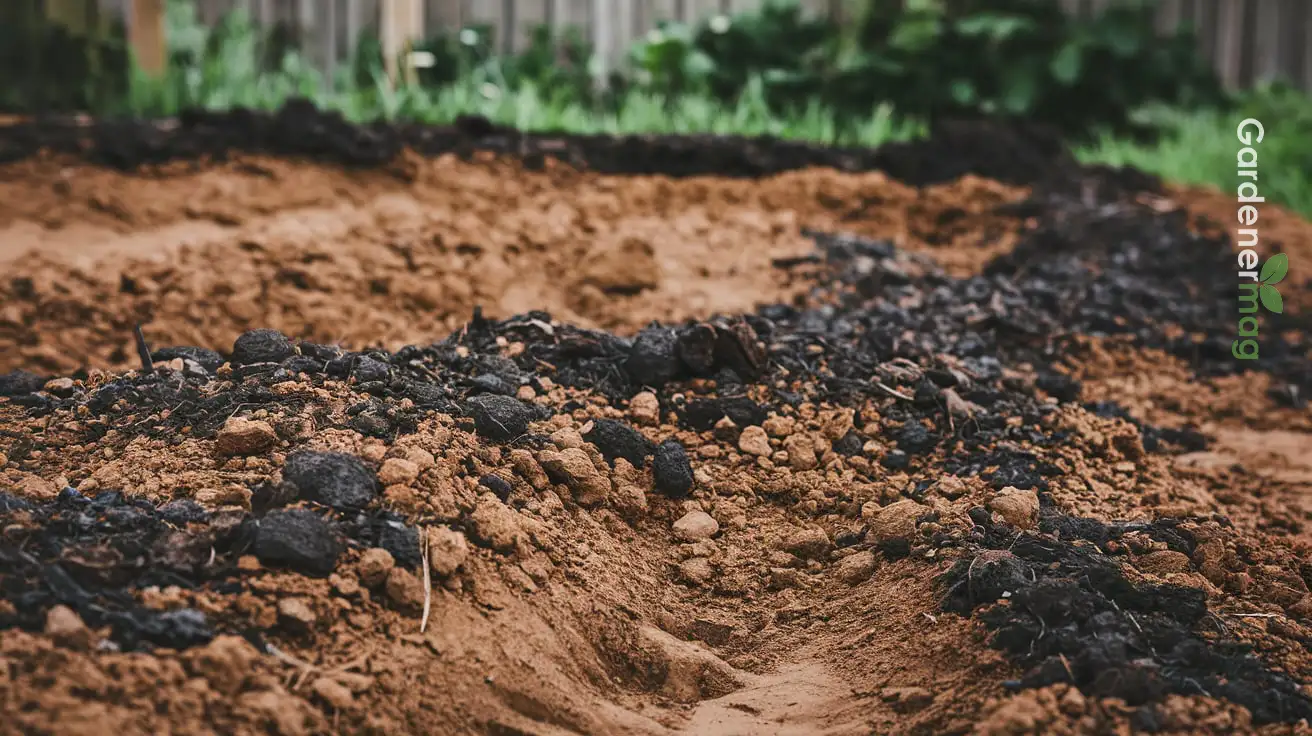
To have a successful tree planting, consider your local climate and soil conditions before planting.
Success often depends on how well the tree species matches your local environment – soil, local temperature, and precipitation levels. A tree that thrives in Savannah might struggle in Seattle.
Climate matching: To ensure the tree can handle local climatic extremes, consult the USDA Hardiness Zone Map. A tree that can’t handle local temperature extremes becomes stressed, and can develop weak wood and invasive roots as it panics for resources.
Soil drainage and compaction: Test your soil for texture, pH, and drainage before planting trees.
Sandy soils have good aeration but poor nutrient retention. Clay soils are nutrient-rich but prone to compaction and waterlogging. Compacted soils have poor structure and restrict water infiltration and root growth.
For adequate aeration and water movement, proper drainage is crucial. However, water-tolerant tree species like river birch or willow are suitable in waterlogged areas to avoid root suffocation.
Wind exposure and storm resistance: Finally, these factors are crucial to prevent damage during storms.
Trees with strong wood and deep roots are suitable for high-wind, open areas. Also, grouping trees reduces wind speed and provides mutual protection compared to isolated trees.
Planting sturdy, slow-growing hardwood trees rather than fast-growing, brittle trees significantly increases long-term resilience against wind and storm damage.
Final Thoughts — Choosing the Right Tree for Your Home
Choosing the right tree for your home is not just a simple weekend project; it requires long-term thinking.
You need to select a tree that provides enough beauty to boost your curb appeal and enough shade to cut your cooling costs, all while keeping its roots in its lane.
Likewise, you need to carefully consider the tree’s size, root behavior, soil requirements, and overall maintenance needs, besides the aesthetic you’re looking for.
All of the tree species mentioned above are excellent choices for planting near your house due to their year-round beauty, manageable size, and non-invasive root systems.
For successful tree planting, always remember this checklist:
- Don’t forget to always ensure the tree matches your local climatic extremes.
- Avoid planting trees, such as Willows, Silver Maples, and Poplars near structures.
- Verify that there are no power lines or structures directly above your planting site.
- Ensure you have at least 10ft. to 15ft. of clearance for medium and small trees.
Frequently Asked Questions (FAQs)
Trees that can be planted closest to a house are generally those with non-invasive roots that can damage foundations and a manageable canopy spread to protect your roof and siding. Small, slow-growing ornamental or fruit trees are ideal.
As a general rule, trees should be planted about 10ft. to 15ft. away from a foundation. Though distance also depends largely on the tree’s mature height.
Yes, tree roots can cause significant damage to building foundations, especially aggressive, thirsty, lateral roots.
Yes, evergreen trees can be safe to plant near homes, but they require careful selection and maintenance to avoid damage from their roots and branches.
The best small trees for a front yard are those with manageable sizes and that provide high curb appeal and summer shade. They include the Crape Myrtle, Japanese Maple, and Dogwood.