

Gardening can seem complicated and frustrating when your garden soil is hardened, unyielding, or producing weeds.
- What is a Garden Tiller?
- Top Garden Tillers For Soil Preparation
- Honda FG110 Mini Tiller
- Sun Joe Electric Tiller/cultivator
- Earthquake Versa 2-in-1 Tiller (99cc)
- Mantis 4-cycle Plus 7940 Tiller/Cultivator
- Earthwise TC70025 7.5-Inch 2.5-Amp Corded Electric Tiller/Cultivator
- Types of Garden Tillers: Guide to Choosing the Right Tiller
- Frequently Asked Questions (FAQs)
One way to get this hard work out and make gardening easier is by using a garden tiller. You need a garden tiller to break up the garden soil, making the soil more porous and allowing for proper aeration.
This will help the plant roots penetrate deeper into the soil and access more moisture and nutrients for healthier growth.
While tilling can be done with hand tools such as shovels, garden forks, etc., this can be arduous and time-consuming. Fortunately, there is a perfect tool for tilling that will relieve you from physical stress and save you time.
This perfect tool is the garden tiller (or rototiller). It can handle a large garden area, making your gardening experience more efficient and less burdensome.
Not only do they save time and effort, but they also help you achieve healthier and more fertile soil.
However, with so many garden tiller options available, it can be hard to choose the right one. In this guide, we will review the best garden tillers for all soil types and garden sizes.
So, whether you are a gardening pro or just getting started, this list will help you find the right tillers for the job. Read on!
Right before we delve into the review, let us briefly discuss what a garden tiller is.
What is a Garden Tiller?
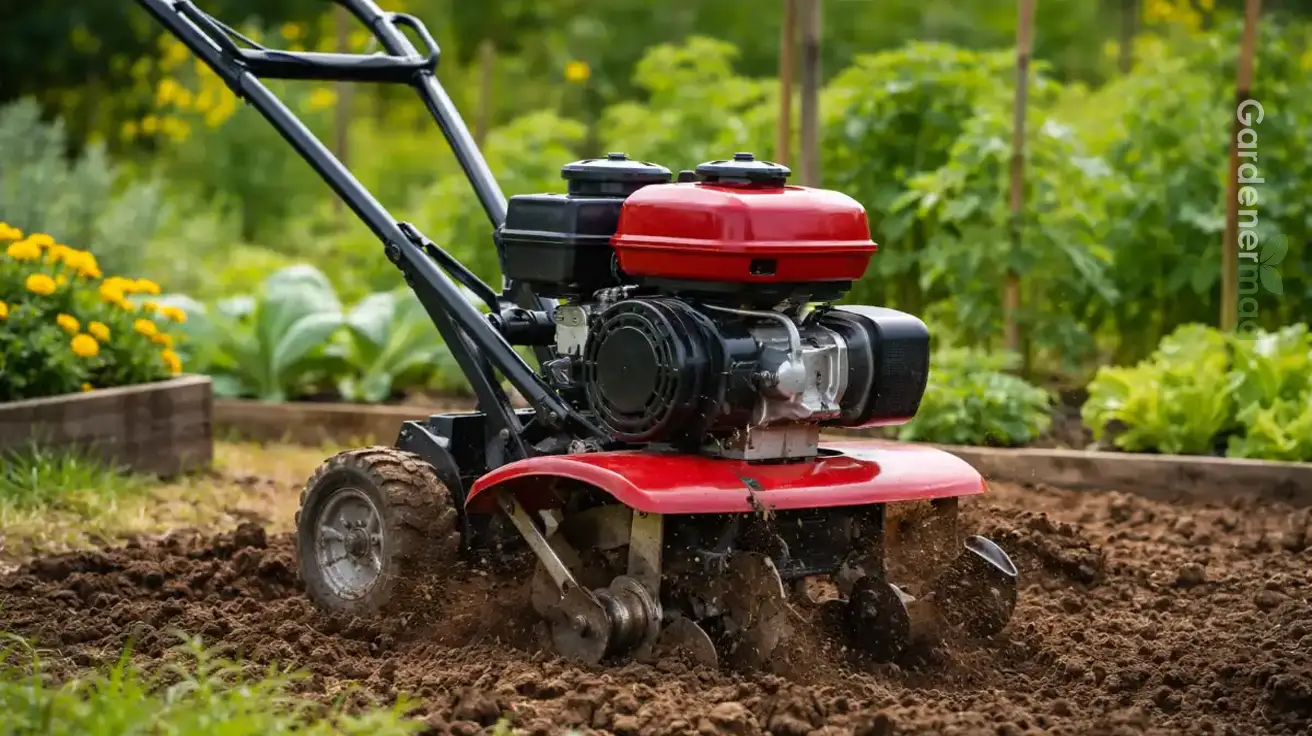
Simply put, a tiller is a gardening tool with special rotary blades for breaking up or loosening heavily compacted soil. Its main function is to break up hard, compact soil to create new landscape or garden beds.
A tiller can be fuel, electric, or battery powered, and offers numerous benefits. Aside from breaking up hard soils, it can be used to aerate the soil, eliminate weeds, incorporate fertilizers or compost, and improve drainage.
Most of the time, gardeners often confuse rototillers with cultivators. However, these are two distinct pieces of gardening equipment with varying functions.
A cultivator does not break up the soil. Instead, it only mixes up already loosened soil. A cultivator is helpful in incorporating fertilizers or compost into an established garden or lawn.
Hence, a tiller is more versatile and can function entirely as a cultivator, but a cultivator can’t perform all the functions of a tiller.
Top Garden Tillers For Soil Preparation
We understand that choosing the right garden tiller can sometimes be difficult. That is why in this section, we will be covering the five best garden tillers you can choose from. Whether you are a beginner or a professional gardener, this list will help you find the perfect tiller for your needs.
Please note that the products mentioned in this review are chosen randomly and are in no exact order.
Honda FG110 Mini Tiller
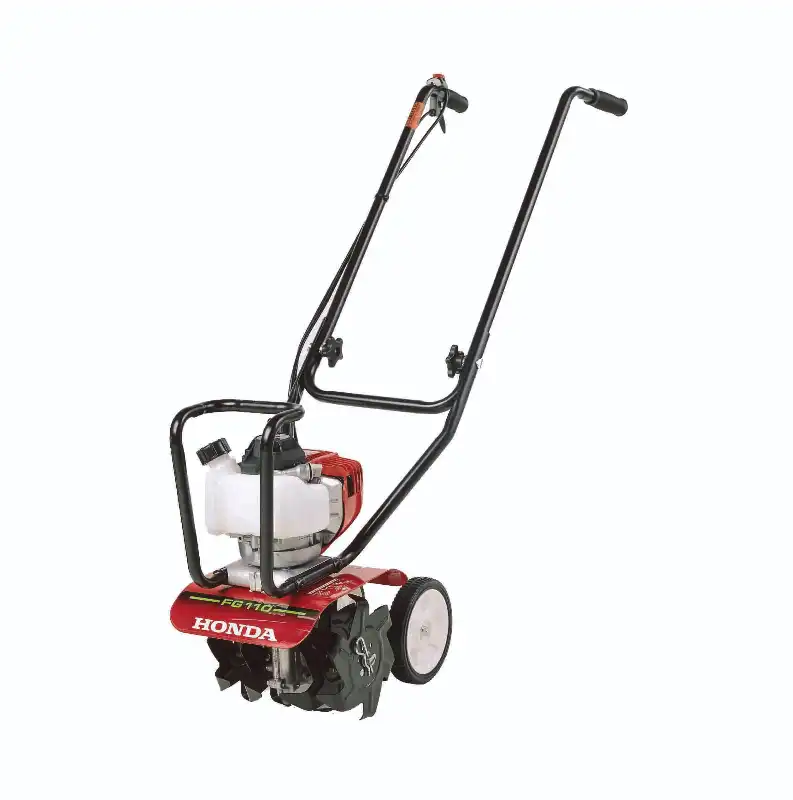
This machine comes first on our list. They are designed to save time and effort during complex tasks in your field. It is powered by Honda’s revolutionary GX25 mini-4-stroke OHC engine.
The design features a single-speed transmission, which uses a worm gear providing more torque. Its exclusive hybrid tines dig and cultivate at the same time. It has foldable handbars and a central carrying handle for easy transportation.
The engine has excellent torque and fuel efficiency and runs on unleaded fuel.
Honda tillers are the best sellers of all time, and they come in different designs and capacities.
Pros
- Performs with quiet operations and low emissions
- Easy to start the engine
- Suitable for hard flower beds.
Cons
- Might require stopovers to refill the gas tank
Sun Joe Electric Tiller/cultivator
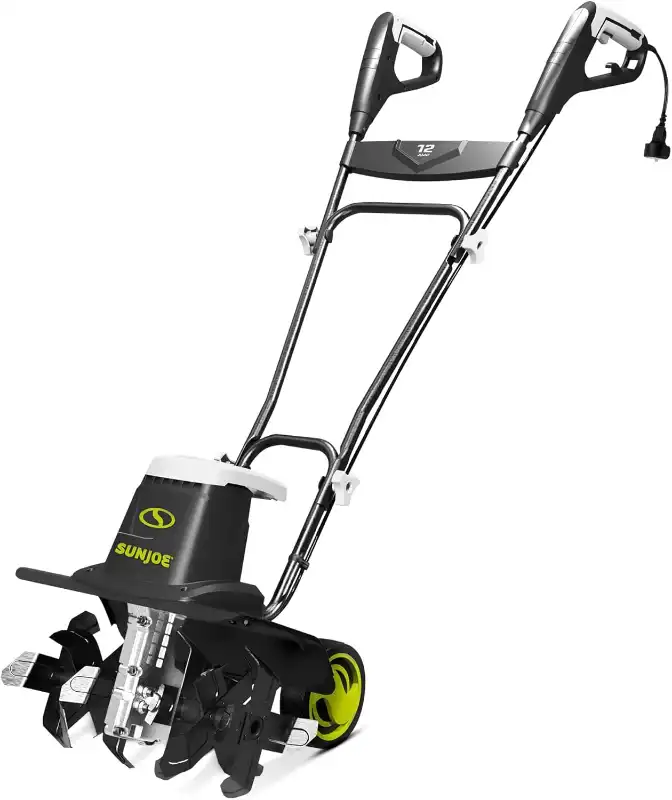
The SunJoe electric rototiller is a corded electric front tine tiller with a maximum width of 16 inches and a tilling depth of 8 inches. It moves on two wheels, which can be positioned at one of the three angles. It comes with a charger cord.
This cultivator has six steel tines and is powered by a 12-amp motor. It is lightweight, weighing only 27.8lb, making it easy to move around.
This tiller can be used to work in a vegetable or flower bed. It breaks up and pulverises hard ground very easily and enhances soil amendment.
Pros
- It is lightweight and can be moved around with ease
- Has a foldable handle that makes storage easier.
- Covers more ground in less time
Cons
- It can’t be used on rocky ground
- The charging cord needs to be frequently moved out of the way while working.
Earthquake Versa 2-in-1 Tiller (99cc)
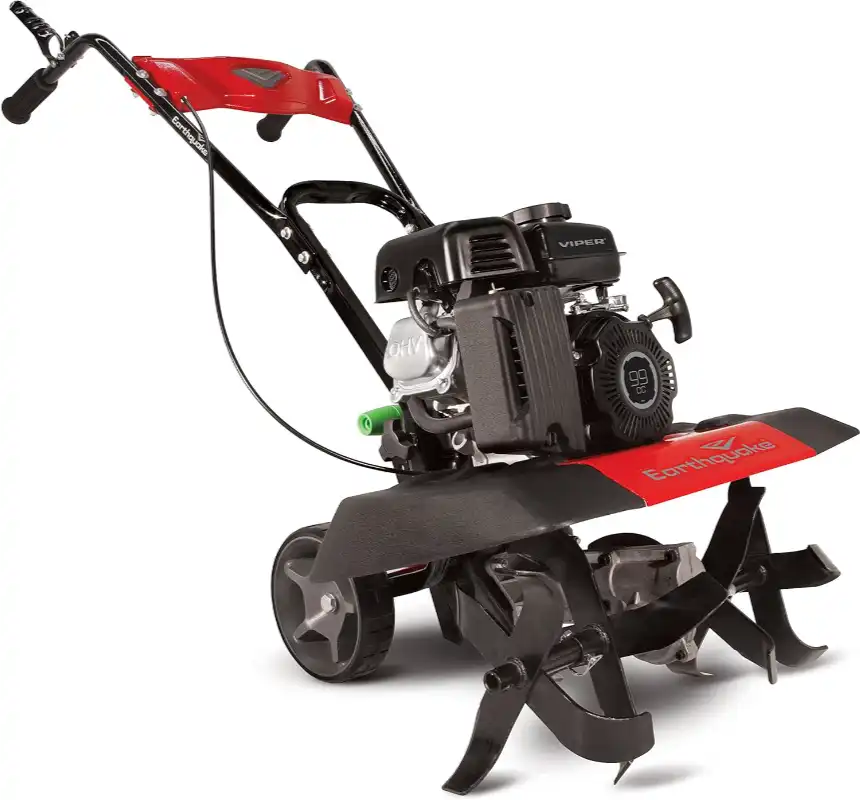
This tiller is built as a two-in-one tiller that comes with an adjustable tilling width of 11,16, and 21 inches. This ergonomic design makes it easily convertible from a tiller to a cultivator within seconds.
With just two passes, an old, overgrown field can be neatly cleared with all roots removed. The handle height can also be adjusted, making it usable for people of different heights.
It operates as a tiller by working through large plots of land to prepare the ground for sowing, and as a cultivator, the earthquake versa can mulch and improve soil structure.
Pros
- 2-in-1 Tiller & Cultivator
- Adjustable Tilling Width (11″, 16″, or 21″)
- 99cc 4-Cycle Viper Engine
Cons
- It can be difficult to make 90-degree turns
- Turning on the engine can be a bit challenging
Mantis 4-cycle Plus 7940 Tiller/Cultivator
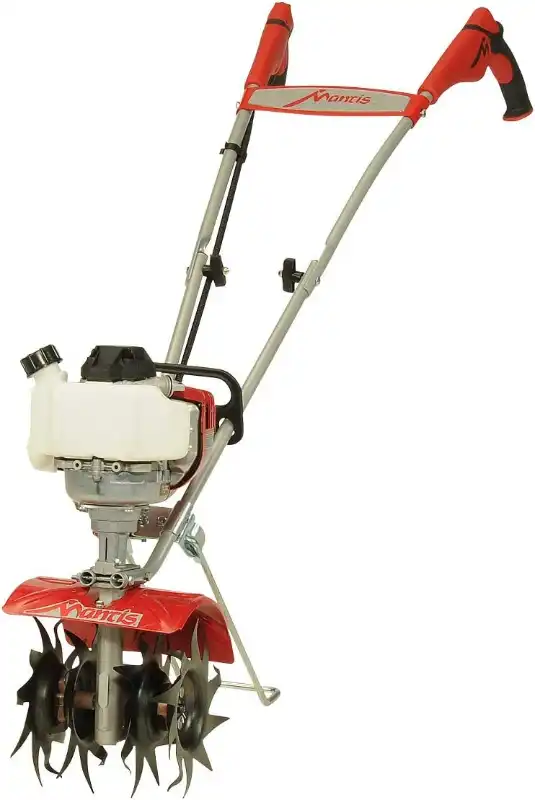
This rototiller is ideal for fields of all sizes. A 25cc Honda four-cycle engine powers it, and it is easier and quieter to start than the conventional 2-cycle models. The mantis operates with a maximum speed of 240 rpm, and it can be used on tough farm floors.
It is lightweight, weighing only 24 pounds, but it is very durable and robust. It features a kickstand that keeps it upright when not in use.
Pros
- Features a variable speed throttle
- Easy to steer in tight spaces
- Has a recoil start system that offers smooth operation
Cons
- Might require refueling while working
Earthwise TC70025 7.5-Inch 2.5-Amp Corded Electric Tiller/Cultivator
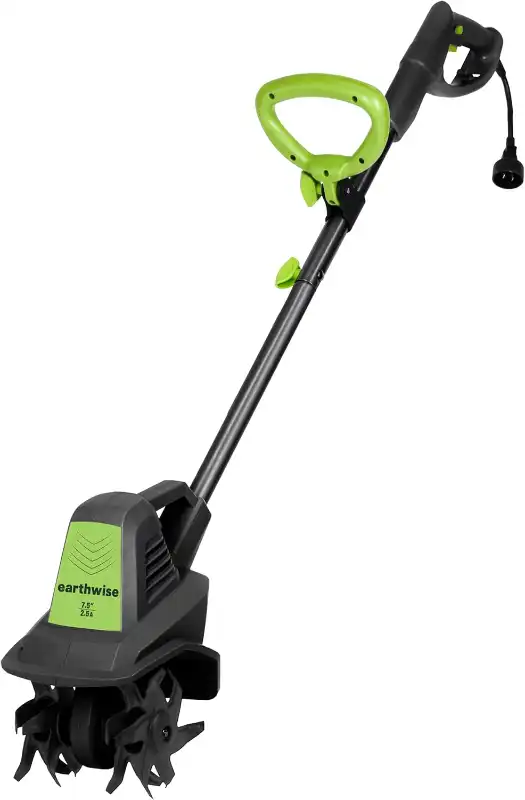
The Earthwise 2.5-amp electric cultivator and tiller is the most budget-friendly option on our list. Its 2.5-amp electric motor is powerful enough to handle tough garden tasks, such as breaking up soil, aerating it, and removing unwanted plants.
This lightweight tiller is environmentally friendly with no harmful fuel emissions. It features a cultivating width of 7.5in and a depth of 6in, which makes it ideal for flowerbeds, raised beds, and vegetable gardens.
The four durable tines dig deep into the soil for effective cultivation with minimal effort on your part. Its compact size allows you to maneuver easily around tight spaces and obstacles, such as plants or structures in your garden.
What more?
Starting the tiller is effortless with its single lever switch, eliminating the hassle of pull cords or oil and gas maintenance. The ergonomic soft grip handle enhances comfort during use, and the built-in cord retention hook ensures uninterrupted power.
Whether you are creating new garden rows or maintaining existing ones, this tiller offers precision and control for all your gardening needs. If you are looking for a reliable, eco-friendly, and user-friendly tiller for maintaining your garden, this is the best option for you.
We hope this selection simplifies your decision-making process and makes your quest for the perfect tiller much easier.
Pros
- Lightweight design
- Soft ergonomic grip
- Powerful 2.5-Amp motor for superior power
Cons
- Not suitable for rocky ground
Types of Garden Tillers: Guide to Choosing the Right Tiller
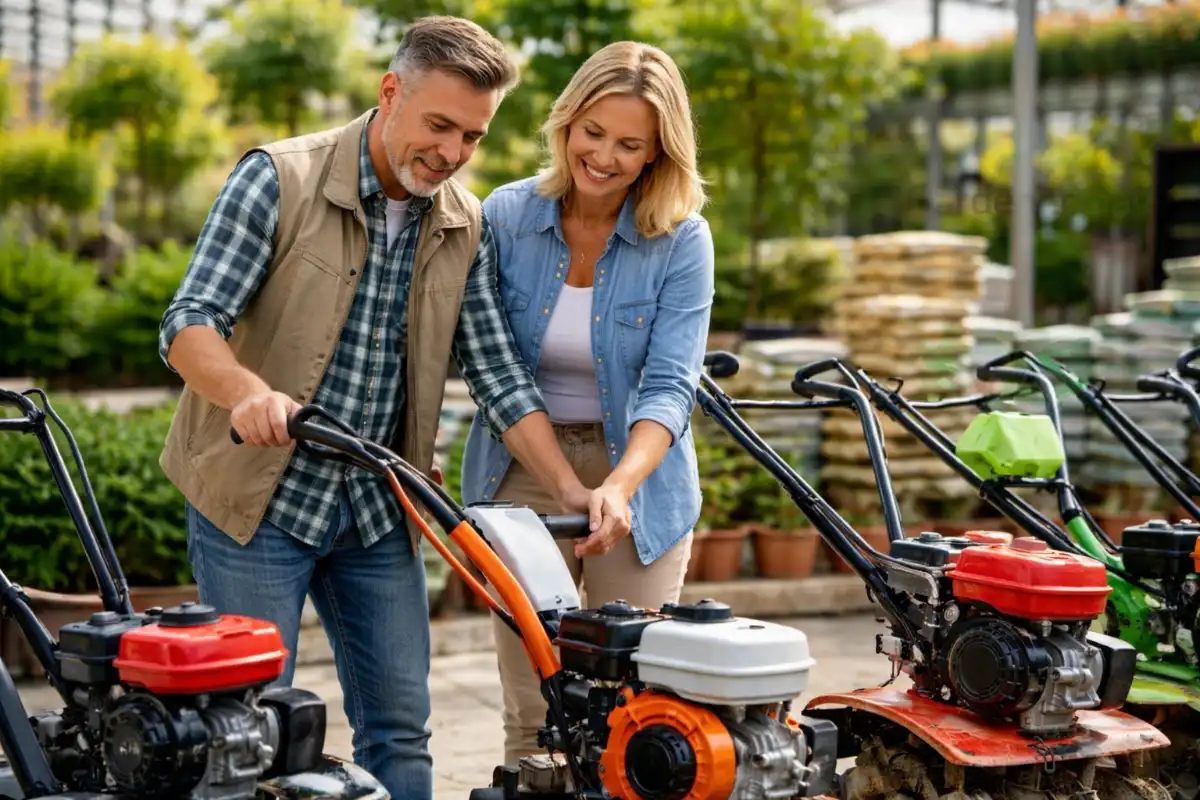
Based on the position of their rotary blades (tines), tillers can be categorized into the following:
Front tine garden tillers
Just as the name suggests, these tillers have their blades before the wheels. This position makes it easy for the tines to turn and maneuver in any direction.
They are smaller in size, lighter, weighing less than 100 lbs., and are most commonly used of the three types. They are perfect for small to medium-sized gardens with light loamy or sandy soil. More so, they can dig about six to eight inches deep into the ground.
Please note that this tiller type is not suitable for breaking new ground.
Mid tine garden tiller
This tiller type has its blades in the middle, directly under the engine. This positioning makes the machine more balanced for tilling because the engine adds weight to the tines.
You can use these tillers to perform similar garden functions as the front tine tiller.
Rear tine garden tillers
Rear tine tillers have their tines behind the wheels, after the engine. Due to their location, these blades can rotate in three different directions.
Of the three types, this tiller type is the most powerful one. They are heavy equipment and you can use them to cover a large area of land. These tillers are best used for breaking up very hard and rocky soil.
Frequently Asked Questions (FAQs)
Yes, there is a difference between a rototiller and a cultivator. Both are different in usage. As explained above, you use a rototiller to break up hardened ground, while cultivators are used to break up the top layer of the earth to prepare it into a smooth seedbed. Tillers are for deep digging, while cultivators are for surface digging. Although a tiller can do the work of a cultivator, a cultivator can’t perform the task of a tiller.
Yes, there are a few adverse effects to tilling. One of the adverse effects is the potential for soil disruption. Over-tilling can disrupt the soil structure as well as destroy beneficial microorganisms in the soil, leading to poorer soil health over time.
The best time to use a garden tiller is autumn and spring. These are the two best seasons to use a tiller on your garden.